The Enemy Within: Jamie Dimon on What Kills Companies
In a fireside chat with Applied Intuition CEO Qasar Younis, JPMorgan Chase CEO Jamie Dimon described how curiosity, clear thinking, and strong management protect companies from decay. Among his warnings to leaders: that bureaucracy—not external threats—is often the silent killer of great institutions.
January 27, 2026 • 5 min read
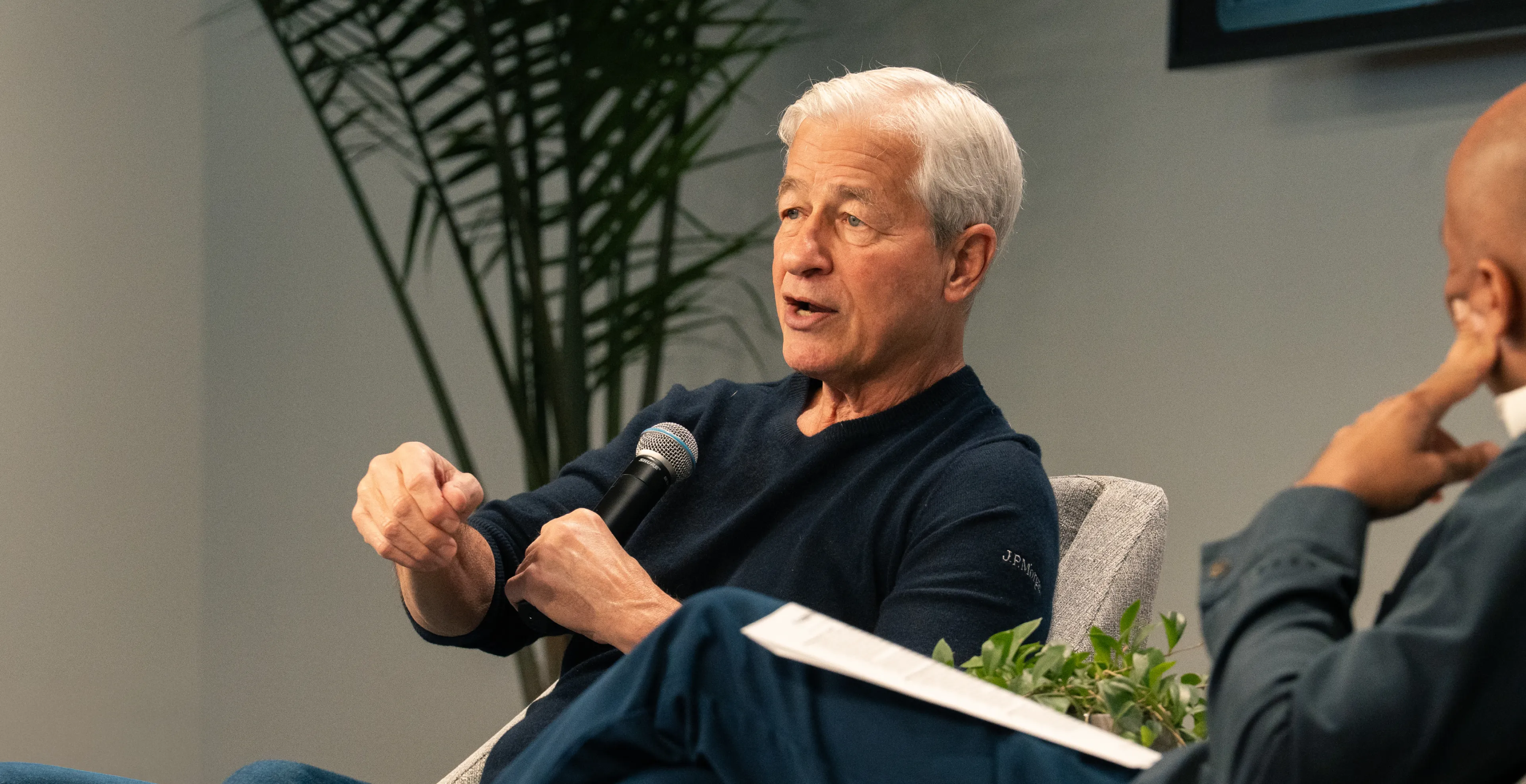
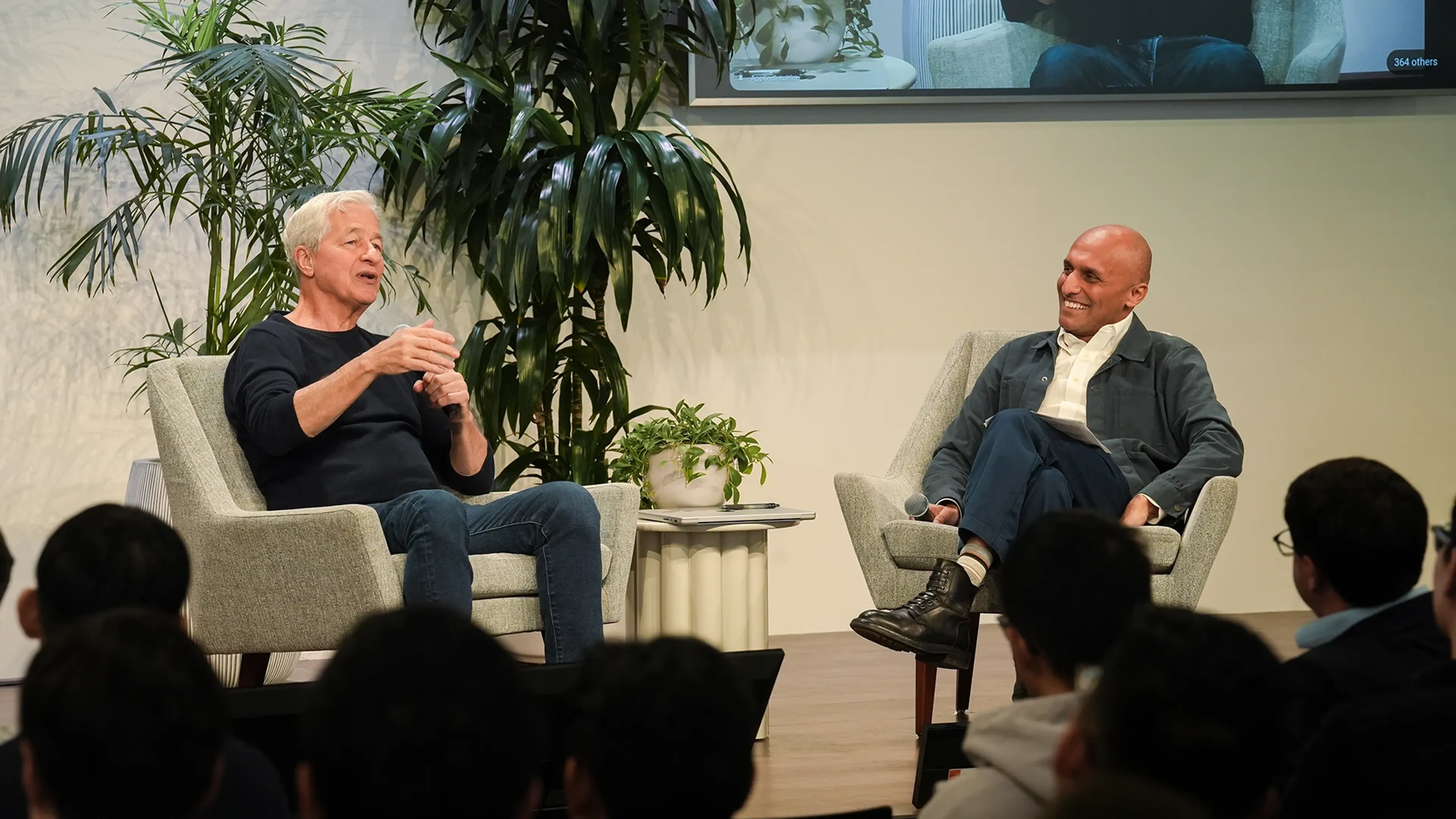
JPMorgan Chase CEO Jamie Dimon (left) during a fireside chat with Applied Intuition CEO Qasar Younis: “I listen to everybody, because I want to know what they have to say”
Jamie Dimon’s secret to running the largest bank in the world?
Curiosity.
“I’m not a humble person, but I have a lot of humility about what I know and don’t know,” said the Chairman and CEO of JPMorgan Chase during a recent visit to Applied Intuition. “If I want to know what's going on in so-and-so’s department, I need to go down there and chat them up. That’s curiosity, and the best leaders have huge curiosity, whether that’s complex subjects or just going to the store to see what’s working.”
For years, Dimon has been visiting Silicon Valley to see what’s working, including making a recent tour of our corporate headquarters in Sunnyvale, California.
“I’m thrilled to be here again,” Dimon said. “You come to Silicon Valley and see the brain power, the work being done, how it’s changing the world faster and faster—it really is uplifting.”
During Dimon’s visit, he sat down with Applied Intuition co-founder and CEO Qasar Younis for a fireside chat to discuss the potential for physical AI, how to manage companies effectively, and the precarious state of the world.
Here are the top takeaways from the nearly hour-long conversation.
America’s Biggest Risk Is Itself
China is a serious competitor, said Dimon. But obsessing over risks from China misses the larger threat: America’s internal challenges.
Increasing supply-chain fragility, a growing dependence on foreign rare-earth minerals, pharmaceuticals produced abroad, underinvestment in domestic production capacity, and lack of cogent long-term strategies—they all weaken America far more than any external adversary.
China’s mercantilist practices, including state subsidies and industrial policy that distort competition, create distinct advantages that few other countries can match. But the U.S. still holds structural advantages when it comes to innovation, demographics, geography, and an unmatched ability to attract talent. The real danger is not being overtaken by China technologically; it’s failing to execute politically and institutionally.
“I’m not worried about China,” said Dimon. “China doesn’t have our system, which is unbelievably innovative. It doesn’t have you here in Silicon Valley. People from around the world still want to come here to be American. I worry more about us doing the right things for us than I worry about China.”
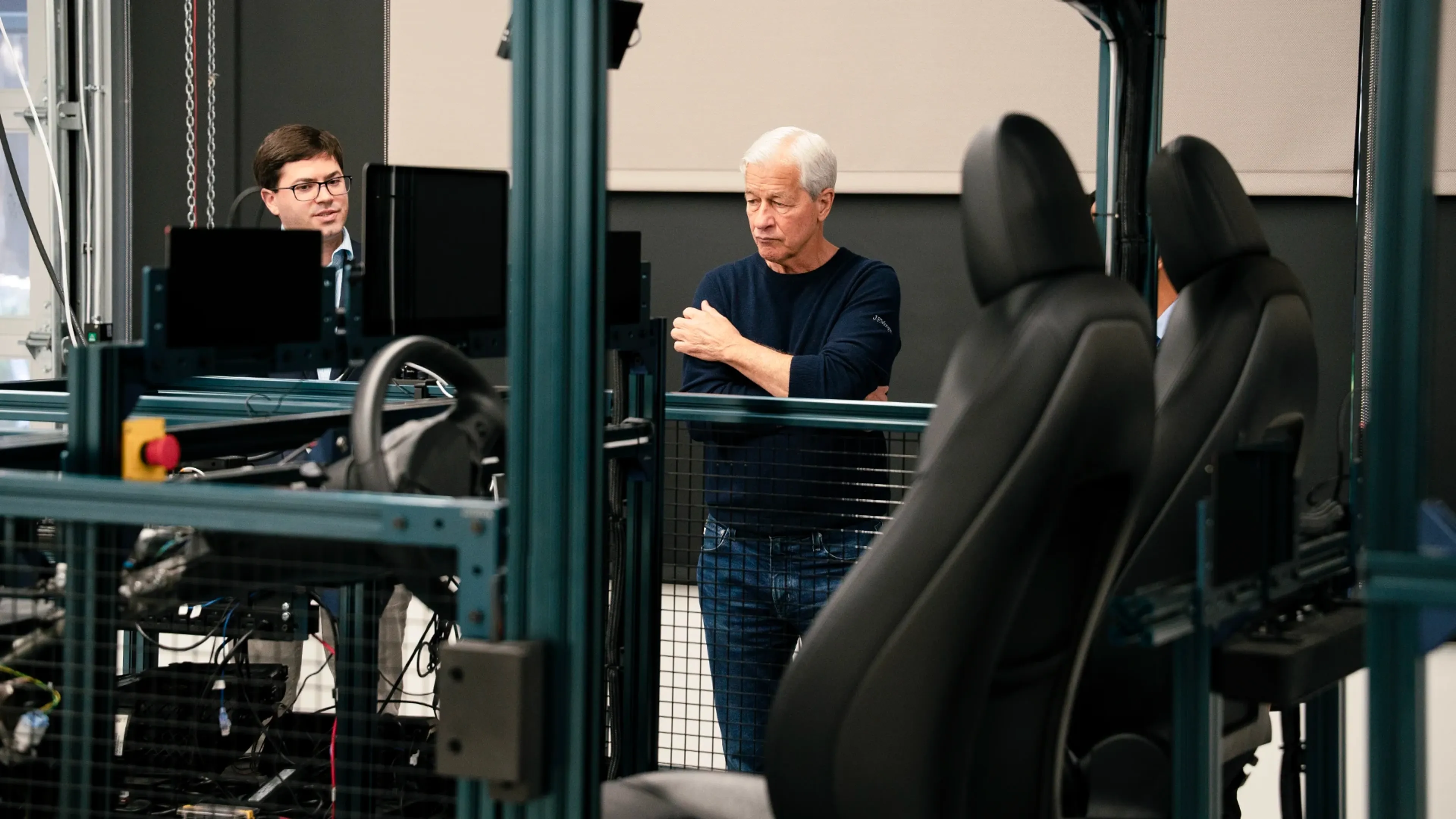
Applied Intuition Co-founder and CTO Peter Ludwig (left) tours the company's headquarters with Dimon
Bureaucracy Is a Death Knell
Bureaucracy is a silent killer of institutions and once-great companies, according to Dimon. And it doesn’t show up as a single bad decision—but as a root cause of complacency, politics, and failure.
“Bureaucracy creates the Petri dish that creates the cancer that kills the company,” he said.
When organizations prioritize internal processes over customers, meetings over outcomes, and risk avoidance over learning, they become sitting ducks to competitors who can easily out-innovate them. Bureaucracy thrives when decisions are deferred, information is selectively shared, and meetings don’t end with ownership and follow-up. It also creates a culture that becomes self-reinforcing: Process justifies more process.
“Some people prefer process, which is great, but not when they admire the problem more than a solution,” said Dimon. “Collaboration is great, but not if it kills the company, so you just have to be vigilant.”
Good Management Is Like Exercise
Companies don’t fail overnight; they decay through complacency and internal politics, said Dimon. The antidote is for managers and leaders to get out from behind their desks and talk to customers and employees.
”When making decisions, have the right people in the room,” Dimon said. “Everyone should speak up.”
Effective management requires follow-up, regular engagement, and a willingness to confront uncomfortable truths. It means breaking down politics, ensuring information flows freely, and insisting on accountability. Decision-making improves when the right people are in the room, information is shared openly, and debates are resolved with data, not politics.
“You’ve got to be relentless,” Dimon said about good management. “It’s like exercising, you have to get up every day, put on your sneakers, and go for a run. It’s just what you have to do.”
The Best Leaders Remain Curious
Curiosity underpins better decision-making, said Dimon. Leaders who ask hard questions, invite dissent, and resist echo chambers reduce error rates, he said. This applies to everything from hiring to strategy to capital allocation. Decisions improve when leaders insist on preparation, data, and diverse perspectives. They’re also willing to revisit choices if they’re wrong.
“I listen to everybody, because I want to know what they have to say and what they think,” he said. “I make sure I have all the right people in the room, because the error rate goes down dramatically when you do it right, including hiring people. You’ve just got to work these decisions over and move on quickly if you make a mistake."
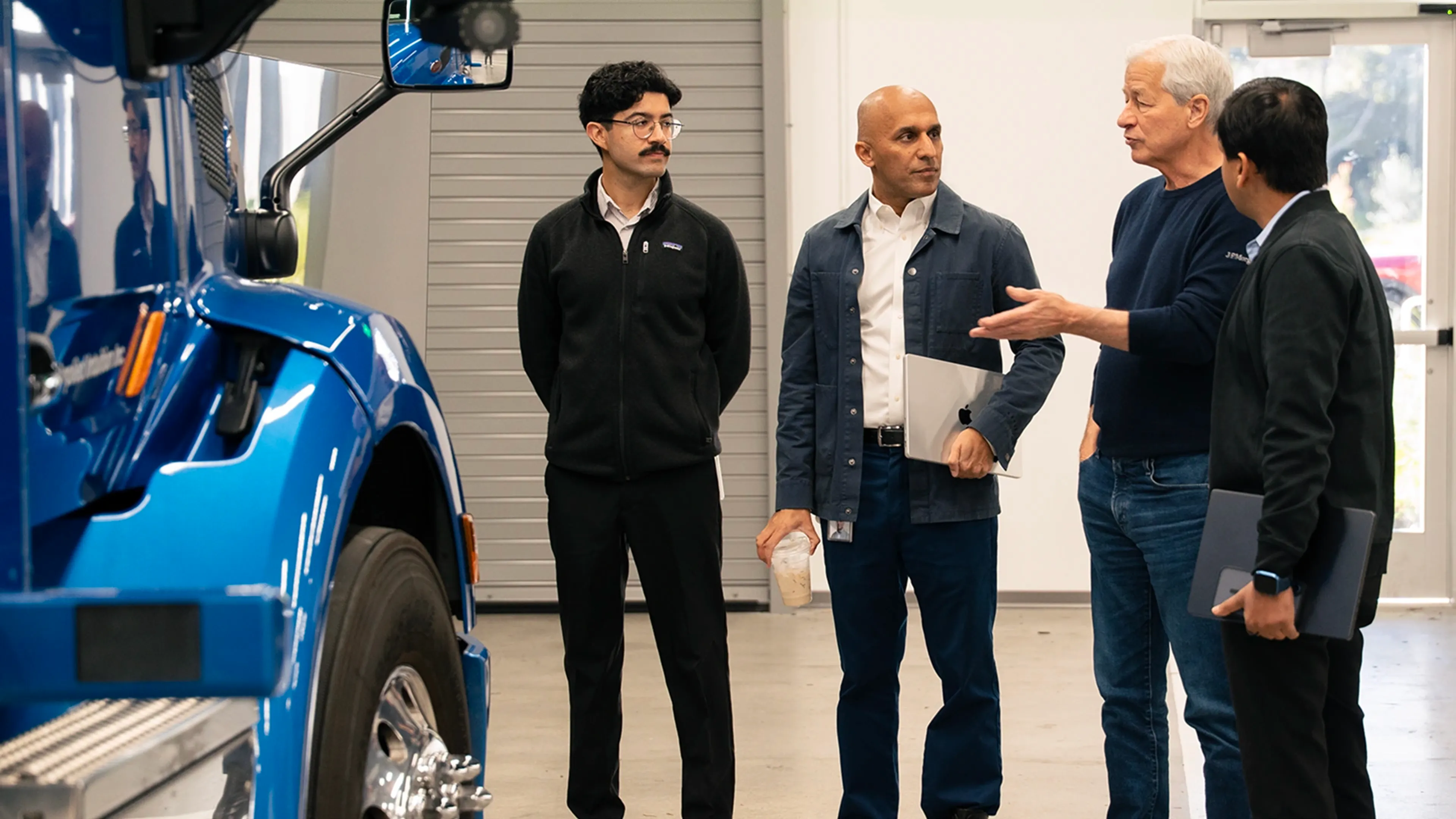
From left: Applied Intuition Solutions Engineer Yash Taneja, Younis, Dimon, and President Varun Mittal discuss autonomy in commercial trucking
Communicating Clearly Will Always Be In Demand
No matter how advanced technology becomes, the ability to think clearly—to analyze, synthesize, and reason—is irreplaceable, according to Dimon. So is the ability to communicate ideas. Dimon noted how every organization has people who make you want to lean in and listen when they speak.
“You want to hear what they have to say,” he said, “because you know they’re not going to waste your time.”
The difference is clarity, preparation, and an uncanny ability to raise the collective IQ of the room. AI may automate tasks, but it does not replace trust, judgment, or respect. People who work hard, think clearly, share information, and communicate well remain invaluable, no matter the industry or era.
“The ability to think is invaluable and it will be invaluable,” said Dimon. “I don’t care what AI does, because human beings will be human beings. There will be people with a great ability to think and a great ability to communicate. You see it all the time, and they’re always in demand, and I don’t think that will ever change.”