Applied Intuition Cabin Intelligence: Making Heavy Equipment Intuitive for Today’s Operators
With Cabin Intelligence, Applied Intuition reshapes the operator experience for heavy industries. The software consolidates fragmented controls into a single intelligent interface, improving safety, comfort, and uptime. For an industry facing labor shortages, it makes machines as intuitive as smartphones—lowering training barriers and attracting new talent. See how Cabin Intelligence modernizes the cab experience.
February 17, 2026 • 7 min read
Despite advances in vehicle intelligence, the interiors of many industrial vehicles have barely changed in years.
A modern tractor, wheel loader, or haul truck often surrounds the operator with competing screens, dense clusters of buttons, and fragmented interfaces that feel frozen in an earlier era. Veteran operators learned these systems slowly, over years. New workers encounter them all at once—an immediate hindrance when the construction industry needs an estimated 500,000 new workers to meet demand, and 50 percent of farmers report a labor shortage.
“When bringing in new people to these industries, these cab experiences can feel overwhelming,” says Joe Forcash, head of agriculture, construction, and mining verticals at Applied Intuition. “They’re not intuitive to use, and they’re outdated.”
Applied Intuition, the leader in cross-industry physical AI, offers the Cabin Intelligence software and tooling platform, allowing OEMs to create customizable in-vehicle experiences that make complex industrial equipment, with its multiple screens and buttons, feel as intuitive as a smartphone. Not only does this bring real-time insights on machine health, site context, and operator controls into a single, adaptive interface that improves safety and increases productivity, but it lowers the technical barrier to entry—opening the door to a new generation of workers.
“The biggest challenge in most heavy industries is labor shortage,” says Forcash. “With Cabin Intelligence, we can streamline controls on a user interface that appeals to younger workers who grew up on screens.”
In-Cab Design as Intuitive as a Smartphone
Built on the company’s Vehicle OS platform, which uses cross-industry experience to refine its safety and automation capabilities, Cabin Intelligence can transform the cab of any industrial vehicle into an intelligent command center, bringing machine health, site context, and operator controls into a single, adaptive interface that improves safety and increases productivity. Displays become cleaner and more consolidated. OEMs centralize control into one screen. Voice assistance introduces natural interaction. Automation features help reduce reliance on sprawling physical controls.
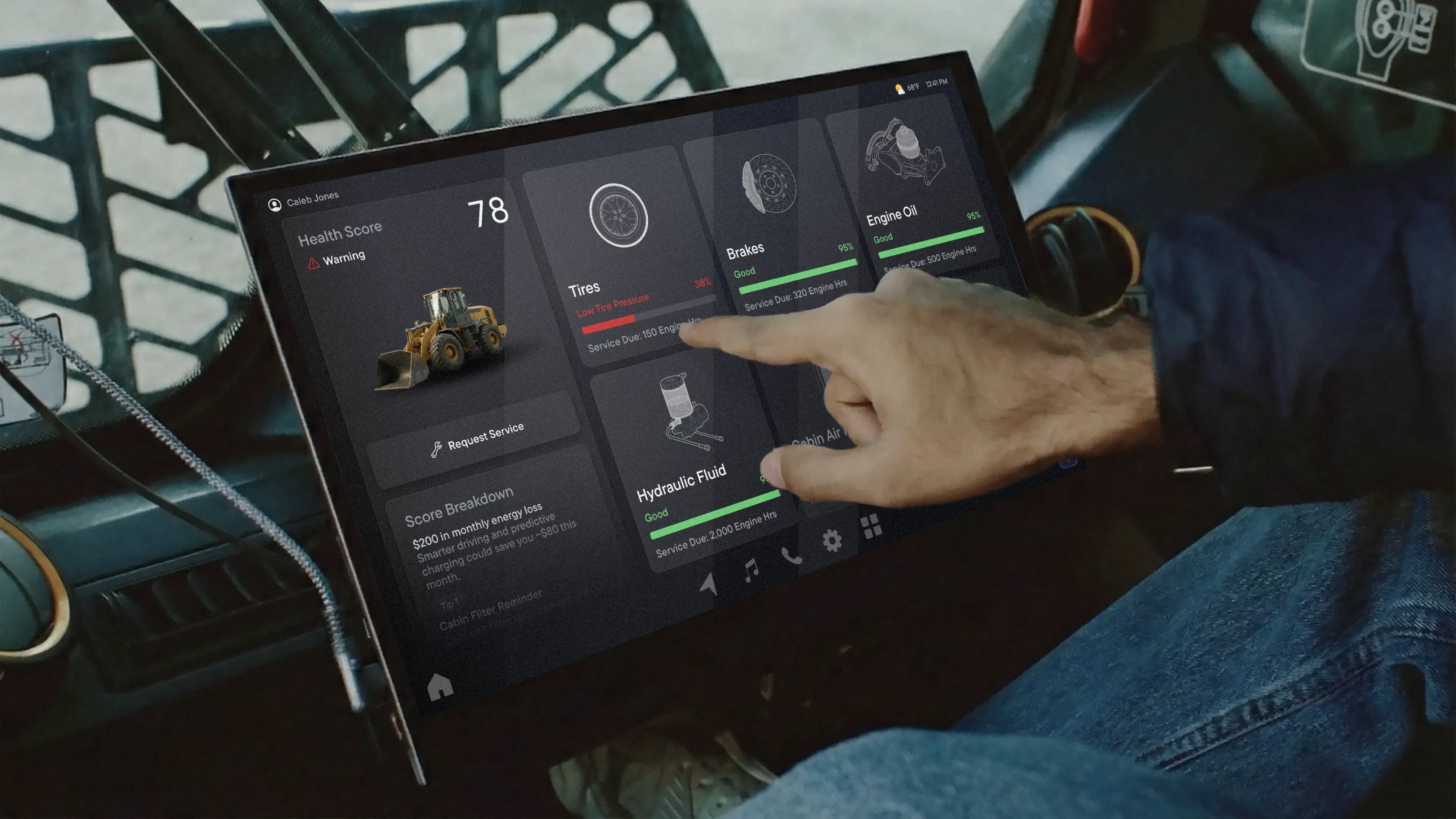
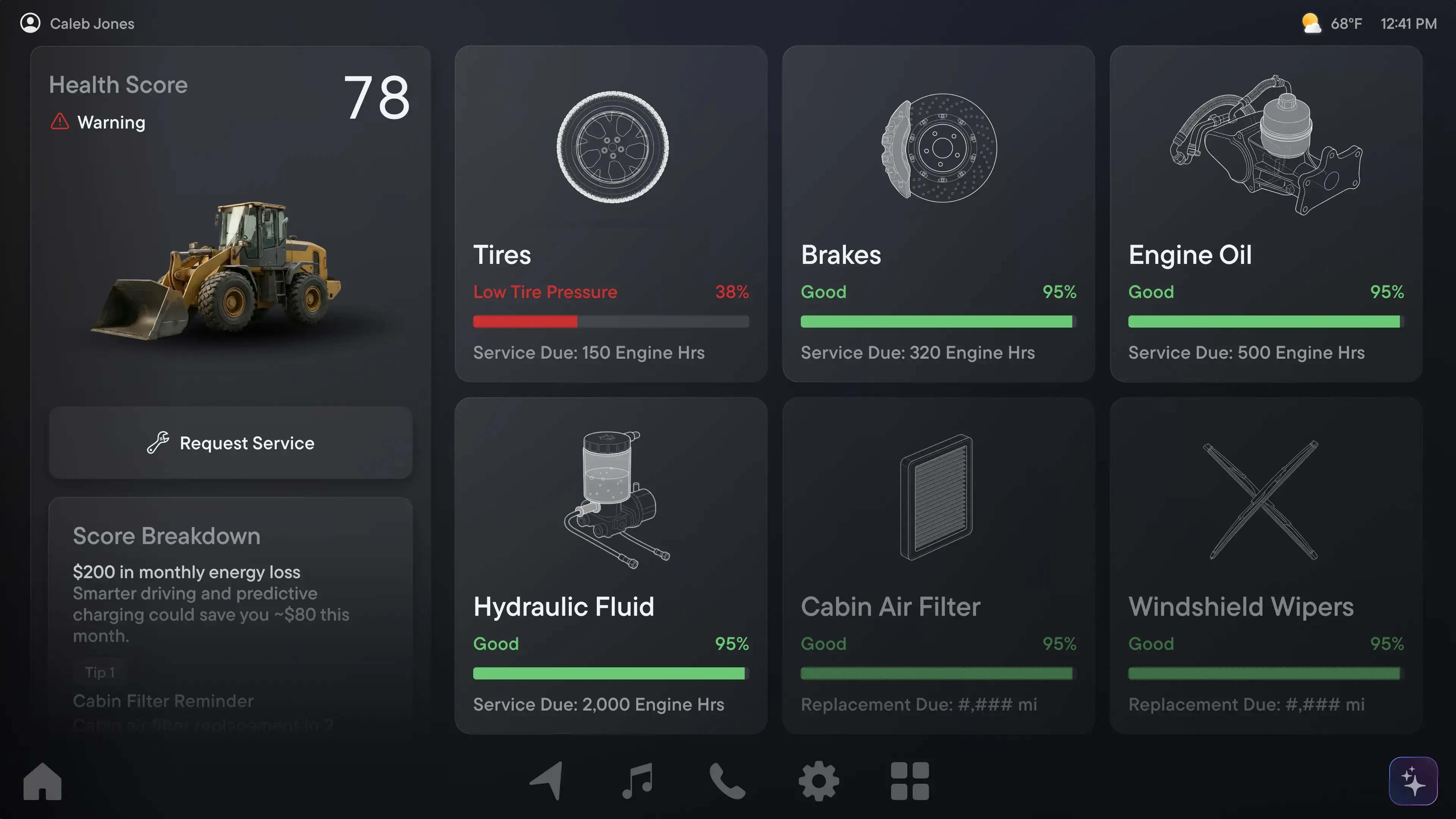
A core capability of Cabin Intelligence is its ability to monitor real-time machine health through available sensor data
Just as important, Cabin Intelligence is built to keep machines running longer. A core capability is condition monitoring, which uses available sensor data to infer component wear, estimate remaining life, and detect failures before they happen. Predictive maintenance provides early warnings. Operators can connect directly to dealers and order parts before downtime hits. The shift from reactive repair to anticipatory service reduces friction across daily operations and protects the economics of high-value equipment.
The redesign also elevates the experience for operators, who often spend long hours in the seat. Integrated camera views expand visibility and thus safety. And just like in a software-defined passenger vehicle, Cabin Intelligence opens the door to integration with infotainment systems like Apple CarPlay. It may seem excessive on a work vehicle, but it also acknowledges that many machines are owner-operated, and that comfort matters.
“This is the kind of cabin experience that new workers know and want,” Forcash says. “Which makes it easier to grow the next generation of operators.”
A Single Platform Deployable Across Fleets
Applied Intuition’s single platform powers physical AI across industries, giving each OEM a white-box development environment and OS that can be customized across fleets.
Already, most off-road and industrial vehicles are capable of supporting Cabin Intelligence. Many of today’s construction, mining, and agriculture vehicles feature drive-by-wire controls, allowing external software to interface directly with the vehicle.
In a compact track loader integration recently performed by Applied Intuition, the team bolted a modular box housing compute hardware and sensors directly to existing mounting points on the roof, minimizing mechanical change. The system connects through the CAN bus to enable motion control and task execution.
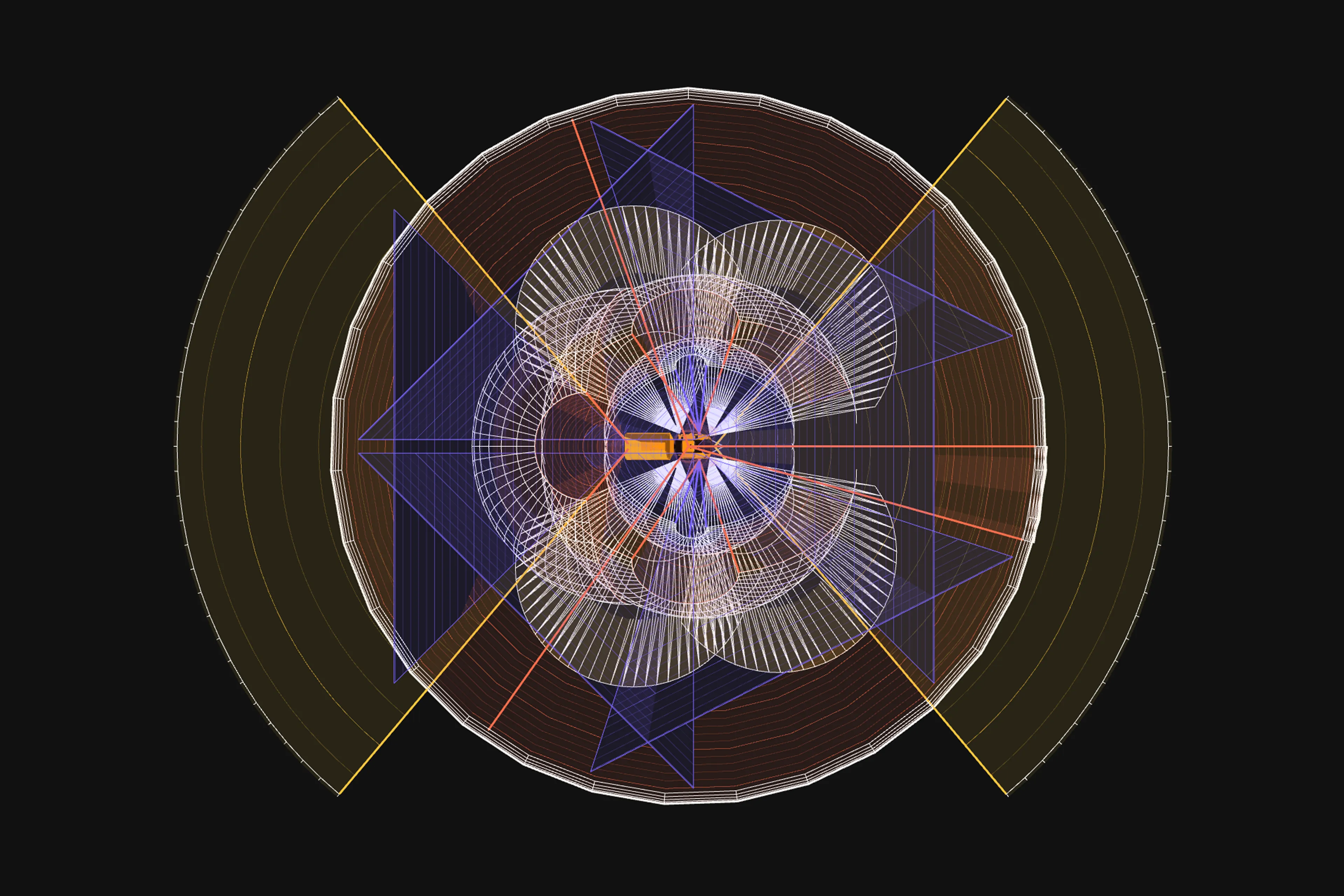
A camera-only autonomy configuration keeps costs down while leveraging vision-based intelligence, with sensor placement validated in simulation before any hardware was installed, reducing iteration and eliminating integration errors. Years of Applied Intuition development across automotive domains—such as delivering Cabin Intelligence with OEM Stellantis—make this speed possible, allowing autonomy stacks, operating systems, and tooling to transfer across industries instead of being rebuilt each time.
“Because we build Cabin Intelligence for automotive customers like Stellantis, we transfer those learnings directly to the industrial sector,” Forcash says. “Our single platform offers better performance and speeds up deployment.”
Agriculture
In agriculture, where modern combines can overwhelm operators with multiple screens and dense physical controls, Cabin Intelligence can help OEMs replace that fragmentation with a unified display that seamlessly switches between tasks or applications. It can surface real-time insight into moisture content and grain yield, identify possible maintenance issues, and even help operators oversee drones gathering crop data. The result is faster, easier onboarding for younger workers and more precise decision-making in the field.
“The average farmer age is 58 years old and less than 10 percent are under 35,” Forcash says. “So this is crucial technology to attract younger labor. They look at a machine with six screens and complicated controls and walk in the other direction. They see a machine with Cabin Intelligence and think, ‘I can handle that.’”
The vision for Cabin Intelligence goes far beyond that, too. An operator, for example, might be halfway through a long afternoon when a maintenance alert pops up. Instead of stopping to diagnose or call a dealer, the farmer makes a small adjustment, finishes the pass, and keeps harvesting with confidence, while also dispatching a full autonomous grain cart to offload the wheat. All with just a voice command.
Construction
Alongside autonomous solutions in construction, Cabin Intelligence can reshape the industry. The simplified digital interface streamlines controls across machines, enables predictive maintenance that limits downtime, integrates visibility that improves safety, and can even offer coaching tips based on operator knowledge level.
In the real world, it might look something like this: A crew is short a worker, so one operator moves from a loader to an excavator mid-shift. The controls and display feel familiar, key settings carry over automatically, and the machine walks the operator through anything that’s different. Work keeps moving instead of slowing down for retraining.
Mining
In mining, where each machine represents enormous capital investment, downtime carries outsized cost. As in agriculture and construction, Cabin Intelligence enables fleet-level health awareness, predictive failure detection, and a direct bridge toward autonomous haulage. At the fleet level, those predictions synchronize with dispatch and routing systems, dynamically adjusting haul paths, loading sequences, or maintenance timing to keep production flowing while minimizing risk. They also sync with autonomous vehicles, as those are integrated into mines around the world.
The savings can be enormous. During long uphill hauls, for example, the display might highlight the throttle range that delivers optimal fuel efficiency without sacrificing cycle time. Operators follow the cue, saving fuel across dozens of runs.
A Single Intelligence Layer Across Industries
The shift underway is larger than any single machine or job site. As Cabin Intelligence spreads, mining trucks, construction equipment, and agricultural vehicles begin to function less like standalone hardware and more like connected, updatable systems that are part of the digital infrastructure that keeps food moving, cities growing, and energy projects advancing.
In that world, progress won’t be defined by how much labor can be removed, but by how much capability each remaining worker can command. The cab becomes a control point rather than a constraint, and intelligence moves from the margins of these industries to their center. By straddling construction, mining, agriculture, and more, Applied Intuition can take learnings from one vertical and apply them across industries and partners—a flywheel effect for industrial vehicle intelligence.
The transformation is already in motion. The only real question is how quickly the machines that built the modern world become driven by software—and what becomes possible when they do.
“Physical AI is transforming construction, mining, and agriculture, and Applied Intuition is well-positioned to lead this new era with our single platform,” Forcash says. “We’re working together with our partners to change the world.”