The End of Fragmented AV Regulation: What the New UN Framework Means for OEMs
After years of fragmented rules blocking global AV deployment, a new UN framework establishes the first unified safety standard for Level 3 and 4 vehicles—and changes everything for OEMs.
May 13, 2026 • 4 min read
For years, progress in autonomous driving has been constrained by fragmented regulation and inconsistent safety standards across markets. This fragmentation increases development cost, limits scale, and forces OEMs to navigate a patchwork of regional requirements rather than building to a single, globally recognized standard.
That is now changing. At the 24th session of the UNECE's Working Party on Automated/Autonomous and Connected Vehicles (GRVA) in January, two landmark regulations were formally adopted: a UN regulation for type-approval markets such as Europe, Japan, and the UK, and a corresponding Global Technical Regulation (GTR) for self-certification markets such as the United States and Canada. Together, they establish the first globally aligned regulatory framework for automated driving systems, covering SAE Levels 3 and 4. A final vote at WP.29 is expected in June, with the framework set to take effect as early as 2027 in type-approval markets.
It's worth noting why this is happening now. Delegations from the EU, Japan, the U.S., and others have spent nearly eight years working to reconcile type-approval and self-certification frameworks that were historically difficult to align. The breakthrough at GRVA in January was the fruit of that process. For OEMs, it closes a gap that has been one of the most-cited barriers to global AV deployment, and one that wasn’t going to resolve itself.
What the Regulations Require
Evidence-based safety cases. Manufacturers must present a structured argument, supported by technical documentation, that their system is sufficiently safe for its intended use. This spans the full vehicle lifecycle—development, production, deployment, and post-deployment monitoring—through a mandatory Safety Management System. In practice, this means maintaining a traceable chain from system requirements through design, testing, and validation, documented in a form regulators can audit. It's a meaningful shift away from pure performance testing toward process accountability.
Performance at or above the human baseline. An ADS must perform at least at the level of a competent and careful human driver. The standard is technology-agnostic: It applies equally to rule-based systems and AI-driven architectures.
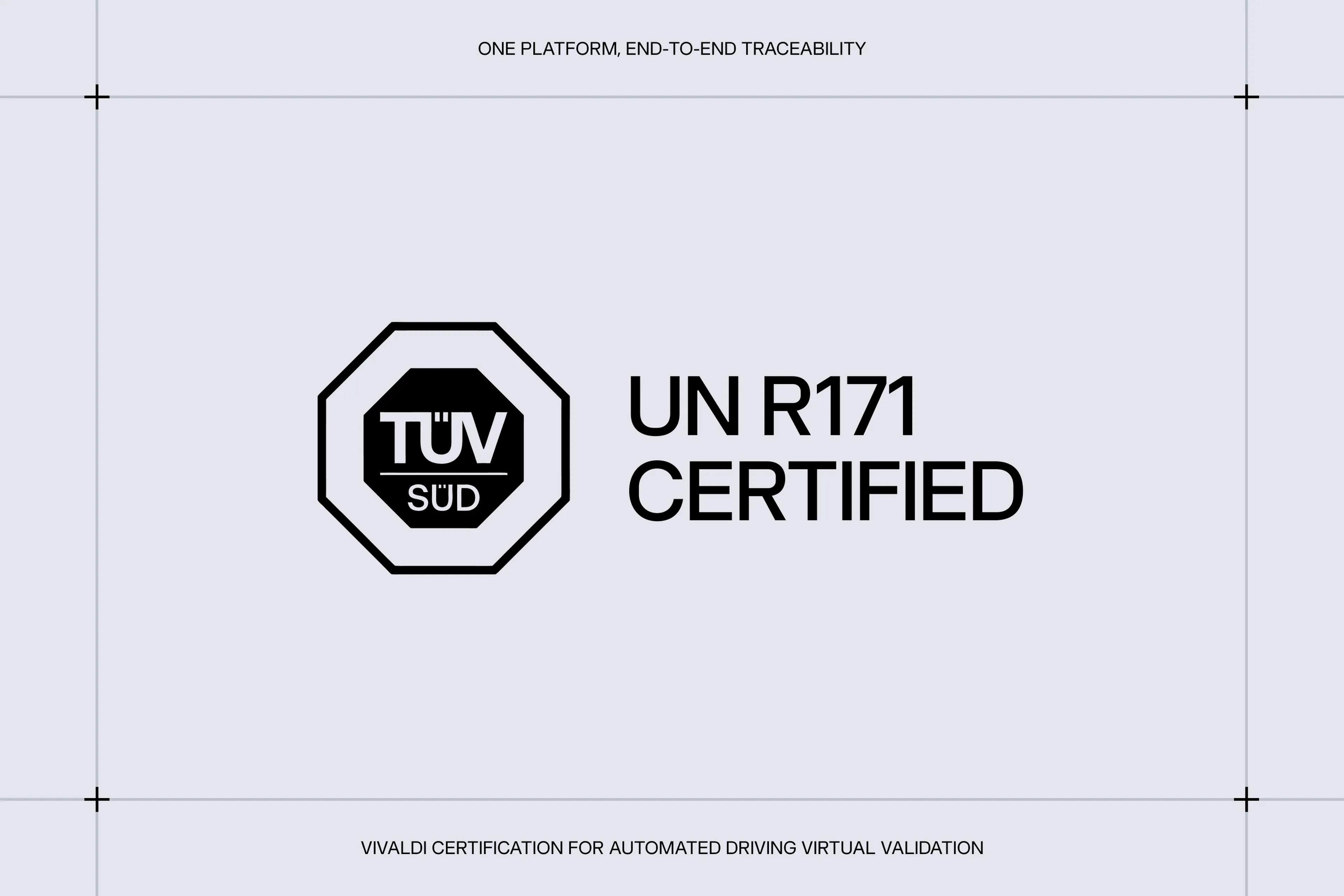
Simulation as a primary validation method. Virtual testing is recognized as valid evidence for demonstrating safety, provided the simulation toolchain passes credibility evaluation and results transfer to real-world conditions. Credibility evaluation means demonstrating that your simulation tools model real-world physics, sensor characteristics, and traffic behavior with sufficient fidelity that results are meaningful outside the simulation environment. Regulators will assess whether the toolchain's accuracy is documented, its limitations are disclosed, and results have been correlated against real-world data. This is a higher bar than simply running a large number of simulated miles.
A global passport for deployment. Harmonized requirements across type-approval and self-certification markets mean manufacturers can build to a common standard and access global markets.
What This Means for Applied Intuition
Applied Intuition's autonomous driving stack is built to meet the requirements this regulation codifies. Our system—perception, prediction, planning, and control—is developed with safety-case methodology at its foundation. Traceability and systematic safety argumentation are embedded in how we architect and validate every component, not treated as an afterthought.
For OEMs evaluating how to bring autonomous vehicles to market under this framework, Applied Intuition offers a production-ready stack with compliance architecture already in place.
Built on the Applied Platform for Physical AI
The Applied Platform for Physical AI is the end-to-end infrastructure for building and validating intelligent systems, the backbone behind our autonomy stack, and the platform of choice for OEMs building their own programs.
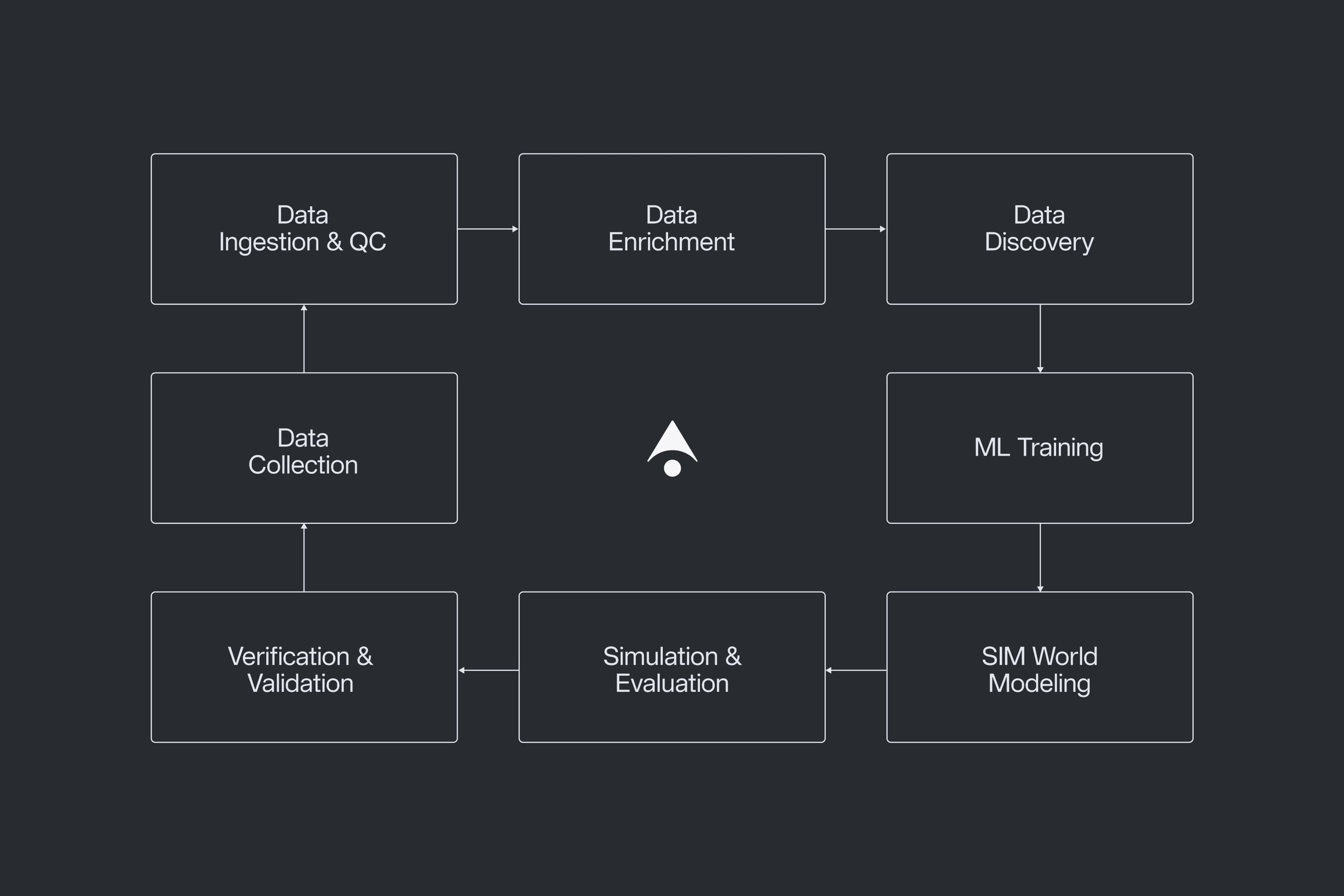
The regulation requires manufacturers to demonstrate safety with credible simulation evidence and reproducible results across the full vehicle lifecycle. The platform handles this at scale: petabyte-scale data ingestion, curation, and processing across fleets and long-running programs, with reproducible lineage and cost-aware execution.
To date, the platform has powered more than 150 million simulations across customer programs, covering billions of driving miles and edge cases that would take decades to encounter on real roads. This scale comes from a closed-loop sensor-to-simulation pipeline: Real-world fleet data is continuously converted into simulation scenarios, and every validation cycle feeds metrics back into the next, compounding the safety evidence base over time.
Meeting the regulation's credibility bar means simulations must faithfully represent real-world physics, sensor behavior, and traffic patterns. The platform achieves this through frontier AI developments in neural reconstruction for high-fidelity environments and ML behavior agents that generate realistic, controllable traffic scenarios. This is the kind of documented simulation fidelity regulators will assess when evaluating a toolchain.
Contact Applied Intuition to find out how our team can help accelerate your path to compliance under the new global AV framework.