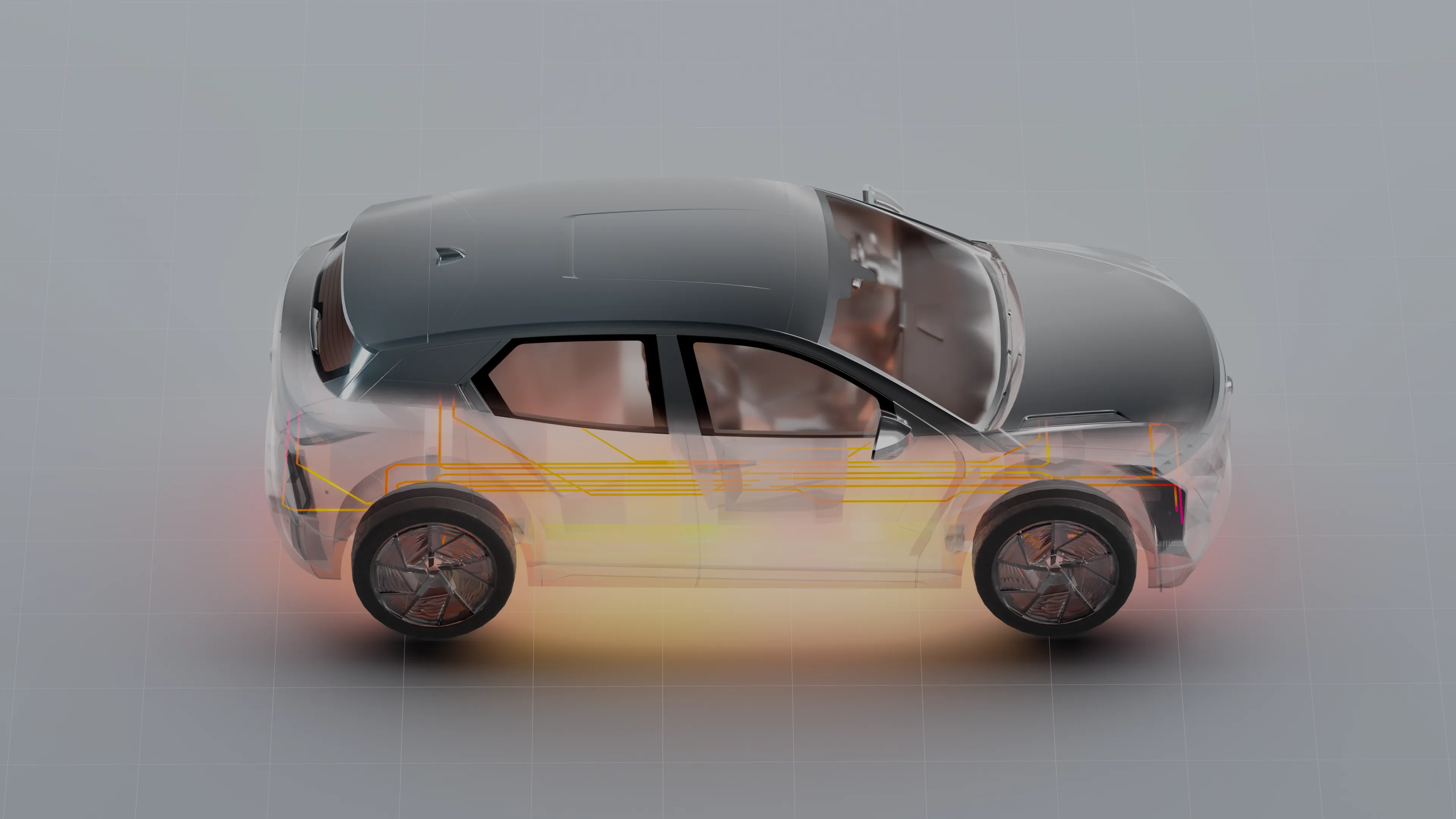
One OS that Unifies Every System in Every Domain
A single platform for any machine that moves enables cohesive behavior across systems while dramatically reducing integration complexity.
Vehicle OS spans domains on a single platform, enabling cohesive behavior across perception, planning, controls, and other critical machine systems. Instead of stitching together fragmented stacks, teams can build on a unified architecture designed for modern intelligent machines.
This approach reduces cross-domain integration effort by up to five times. Engineering teams benefit from simpler system architecture, fewer handoffs between components, and faster development cycles. Programs scale more cleanly, allowing organizations to reuse core software while accelerating the deployment of new machines.
A Production-Ready Foundation for Developing Machine Intelligence
Code-first workflows and built-in observability give engineering teams full control over machine software.
Modern machine software should move at the speed of software engineering—not hardware configuration cycles. A code-first toolchain replaces GUI-bound workflows with programmable development built for modern teams. Engineers model machine behavior in Python, manage changes through pull requests, and collaborate using standard version control.
Observability is built into the platform from the start. Real-time KPIs, system metrics, and diagnostics provide continuous insight into how systems behave across domains. By implementing only the APIs and services a machine actually needs, the platform delivers a leaner footprint with measurable CPU and memory gains while giving teams clear visibility into performance, health, and behavior at every stage of development.
From Code to Machine Without the Friction
Build, test, and deploy hardware, software, and apps in a single, unified environment.
Modern machine systems require coordination across on-board software, off-board services, cloud tooling, and hardware platforms. Vehicle OS brings these components together into one integrated development environment, giving teams a consistent workflow from code to deployment.
Virtualized testing allows engineers to validate system behavior long before hardware is available. Teams can simulate scenarios, verify performance, and iterate on software in parallel with hardware development. By shifting validation earlier in the development cycle, organizations reduce integration risk and compress testing timelines from months to days—accelerating programs without sacrificing reliability.