Inside the Vehicle OS Partnership Powering Stellantis’s AI-Defined Future
Applied Intuition is bringing its best-in-class Vehicle OS, middleware integration and autonomy infrastructure to the automaker’s next generation of vehicles.
The AI-defined vehicle race is no longer about individual features—it’s about the platform underneath them.
That’s what Stellantis and Applied Intuition are now building together.
What began last year as a Cabin Intelligence partnership to help support Stellantis’s STLA SmartCockpit infotainment platform has grown into something far more foundational. Applied Intuition will now bring its unified software stack, Vehicle OS, and autonomy to Stellantis’s STLA Brain, the global automaker’s intelligent vehicle platform. The combination will enable best-in-class experiences across body, infotainment, ADAS, and autonomy systems.
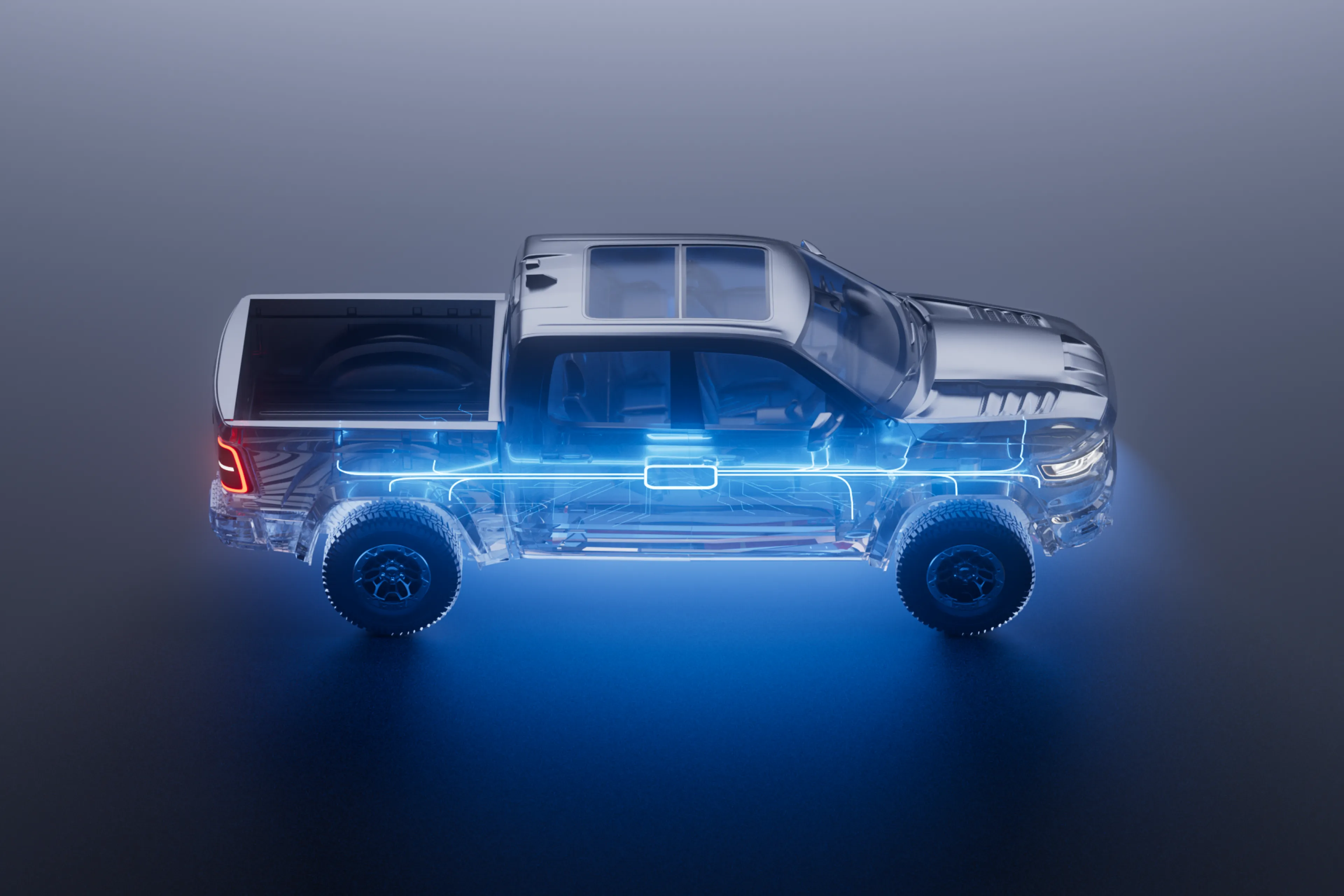
The expanded partnership, announced May 21, establishes Applied Intuition as the core platform and integration partner helping Stellantis reduce software fragmentation across its brands and vehicle programs. The result of the collaboration will be a production-level software foundation that scales more efficiently across the Stellantis portfolio—without requiring Stellantis to rebuild the stack for every new model.
“Speed, scalability and quality are critical as we bring new technologies to our vehicles,” said Ned Curic, chief engineering and technology officer at Stellantis. “Our collaboration with Applied Intuition helps us accelerate the development of a common software foundation across our technology platforms. For customers, this means a faster delivery of new features, a more seamless in-vehicle experience and continuous improvement over time.”
For decades, automakers have had to rebuild large portions of the software stack with nearly every new program.
Doing this over time creates fragmentation with different architectures across brands and vehicle lines, each requiring its own maintenance, validation, and update cycle. This leads to slower iteration, higher costs, and vehicles that can't improve performance meaningfully.
The antidote is what Applied Intuition thinks of as its “endless platform”—the foundational software platform where 50% to 70% of the work is already done before a new vehicle program begins. Applications and features get built on top of that foundation, without needing to be assembled from scratch. The architecture also supports over-the-air updates across the fleet, so vehicles can improve throughout their lifetime, not just at launch.
That’s the vision behind the unified software platform at the center of this expanded partnership with Stellantis. Some competitors are addressing pieces of this problem—like autonomy—but Applied Intuition is building the foundational platform that runs on every vehicle, bringing a modern software architecture to an industry still running on legacy frameworks. In an effort to continue to modernize its fleet and deliver best-in-class experiences, Stellantis is moving toward a centralized, reusable software architecture, built by Applied Intuition, that can support the software-defined vehicles of the future.
“The winners in the software-defined vehicle era will be the companies that stop rebuilding the stack for every vehicle program,” said Qasar Younis, co-founder and CEO of Applied Intuition. “This partnership is about creating a shared software foundation that can evolve continuously across the Stellantis portfolio.”
In a large-scale Vehicle OS program, the difficulty often isn't any single software component, it's making all the components work together seamlessly. Modern vehicles run multiple systems simultaneously—different autonomy stacks, middleware layers, compute environments, sensors, and applications—and they all need to communicate reliably and safely.
Applied Intuition is the rare company that can offer a solution to that challenge: a unified software platform that can help deliver industry-leading experiences across body, infotainment, and autonomy. That full-stack capability is exactly what this partnership brings to Stellantis. Applied Intuition is also contributing production low-speed autonomy features including autonomous parking, trailering, and driver monitoring.
Making systems this complex work together requires deep full-stack expertise, rigorous validation, and the ability to iterate quickly across the vehicle architecture. That’s what makes Applied Intuition a strong long-term partner for Stellantis. By providing the OS foundation, middleware, and integration layer across multiple systems, Applied Intuition becomes embedded in how the next generation of Stellantis vehicles is developed and evolves over time.
The collaboration is also designed to fundamentally accelerate how Stellantis develops and deploys vehicle software. Historically, automotive software programs have moved on timelines measured in years, slowed by fragmented architectures, difficult integration work, and lengthy validation cycles. Applied Intuition is helping compress those timelines by bringing Silicon Valley-style development speed to production vehicle programs. This isn't a projection: In Applied Intuition's prior IVI collaboration with Stellantis, what had previously required four years of development was completed in under two years—a more than 50% reduction in timeline.
“In order to consolidate and go faster, we selected Applied Intuition as a key partner to help us develop our core capabilities and it’s been a major accelerator for us,” says Curic. “Shipping infotainment systems typically is a long-term endeavor—three years or four years, depending when you start. With Applied Intuition, it’s sub two years, and it's not just any smart cockpit, it's the most advanced system that exists today in the industry.”
Applied Intuition’s observability tooling, simulation infrastructure, and code-first development workflows were built specifically for the AI-defined vehicle era. When an issue emerges in the vehicle stack, engineers can reproduce it in simulation, trace the root cause across systems, validate fixes rapidly, and deploy updates far faster than traditional automotive workflows allow.
That ability to iterate quickly across body systems, infotainment, ADAS, middleware, and autonomy infrastructure is becoming one of the defining competitive advantages of modern vehicle development. Through this partnership, Stellantis is building a software platform designed not only to scale across brands, but to evolve continuously.
The expanded partnership with Stellantis marks another step in Applied Intuition’s evolution from applications provider to core software infrastructure partner for the software-defined vehicle era. As vehicles become increasingly intelligent, continuously updatable systems, OEMs will need unified software foundations capable of scaling across brands, vehicle programs, and generations of hardware.
That shift is already reshaping how vehicles are developed. The companies that move fastest will increasingly be the ones that can reuse software across programs, integrate new capabilities quickly, and continuously improve vehicles long after they leave the factory floor.
The future of the vehicle will not be defined by a single application or feature. It will be defined by the platform underneath it.