The Next Chapter for SDS: Japan
Applied Intuition has now extended its Self-Driving System across North America, Europe, and Asia—all in under a year.
Japan is one of the most important automotive markets in the world—and one of the most demanding environments for intelligent driving systems.
Home to some of the industry’s most respected engineering organizations, highest quality standards, and most complex road networks, Japan presents a unique challenge for autonomy and ADAS developers.
That’s why we’re excited to announce the expansion of Applied Intuition’s Self-Driving System (SDS) to Japan.
Less than a year after launching SDS for Automotive in North America and Europe, we’re bringing the platform to a market that presents a unique combination of challenges for advanced driver-assistance systems and autonomy. Dense urban corridors, multi-exit intersections, left-hand traffic patterns, and stringent regulatory requirements create a uniquely challenging environment. This demands systems capable of adapting quickly while maintaining safety and performance.
For us, this expansion—which was announced at Intersect 26: Japan, our featured showcase of Applied Intuition perspectives and technology for industry professionals—is about more than entering a new market. It’s another step toward building a globally scalable self-driving platform capable of supporting automakers across regions, regulations, and driving environments.
“Launching SDS in Japan marks a major milestone that reflects the remarkable pace at which we’re advancing production and deployment of autonomous driving,” says Will Lin, head of automotive at Applied Intuition. “Today’s market demands a system that can adapt to all vehicle segments, powertrain types, and regional regulations, and SDS is purpose-built to deliver that, making intelligent driving accessible to everyone.”
Our expansion into Japan did not begin this year.
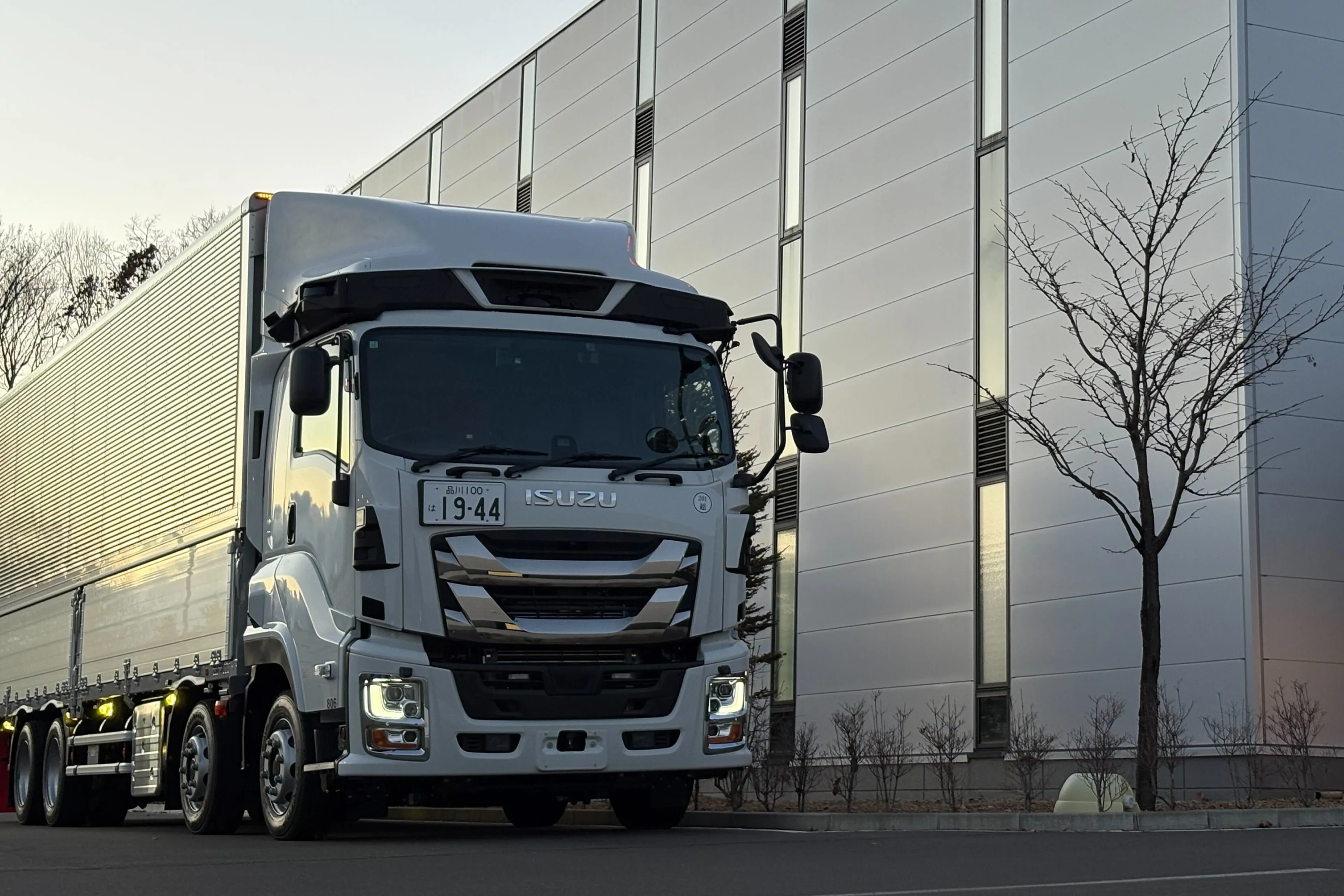
Applied Intuition has invested in Japan for years, working closely with some of the country’s leading automotive and commercial vehicle manufacturers. We’ve built local engineering teams, established vehicle operations, developed regional data infrastructure, and supported autonomous trucking programs in the market, including our work with Isuzu Motors.
Those investments have given us a deep understanding of how Japanese automakers develop, validate, and deploy intelligent vehicle systems.
They have also enabled us to build the local infrastructure necessary to support SDS at scale. By collecting and processing driving data specific to Japanese roads, traffic behaviors, and operational requirements, we can rapidly adapt and validate autonomy capabilities for local conditions.
That combination of global platform development and local operational expertise is increasingly important as automakers seek solutions that can scale across markets without sacrificing performance.
That experience in Japan helped shape how we built SDS from the beginning.
Behind Applied Intuition’s SDS platform is an end-to-end autonomy stack powered by neural networks trained on large-scale real-world and synthetic driving data. The system enables advanced driver-assistance and automated driving capabilities across urban driving, highways, and parking environments, helping vehicles navigate complex scenarios. By using production-grade cameras and radar sensors instead of lidar or HD maps, SDS is designed to bring advanced driving capabilities to passenger vehicles at production scale.
The platform is powered by an integrated, end-to-end data engine trained on diverse real-world and synthetic datasets to enable rapid stack iteration and power more human-like autonomous driving experiences. For OEMs deploying vehicles in Japan, SDS supports advanced driver-assistance capabilities including intelligent parking, active safety, and point-to-point urban driving, while providing a path toward high-level L3 and L4 capabilities over time.
Just as importantly, SDS is designed to fit within the realities of modern vehicle development. A key differentiator of SDS is its adaptability. Rather than forcing automakers into a fixed autonomy stack, SDS can be tailored to each OEM’s vehicle architecture, brand experience, and long-term software strategy.
The platform also supports multiple automotive compute architectures—including recently announced passively-cooled NVIDIA DRIVE platforms and other leading automotive silicon solutions—allowing automakers flexibility as they define their hardware strategies.
From the beginning, SDS was designed as a global platform. The same architecture that powers deployments in North America and Europe can now be adapted to Japanese roads while continuing to improve through a shared development, validation, and data infrastructure. For automakers, that means a faster path to deploying advanced driver-assistance capabilities across regions without rebuilding the system from the ground up each time.
The future of vehicle intelligence will not be built market by market. It will be built on platforms that can learn, adapt, and scale globally.
We believe the next decade will bring increasingly intelligent, increasingly autonomous vehicles to roads around the world. The automakers that succeed will be those that can continuously improve those systems while deploying them efficiently across global fleets.
Bringing SDS to Japan is another milestone on that journey, and it’s another step toward making autonomy scalable worldwide.