Applied Intuition deploys autonomous haulage in Australia
Applied Intuition’s SDS for Construction helps Heidelberg Materials advance autonomy where terrain varies, connectivity drops, and unpredictability is the norm.
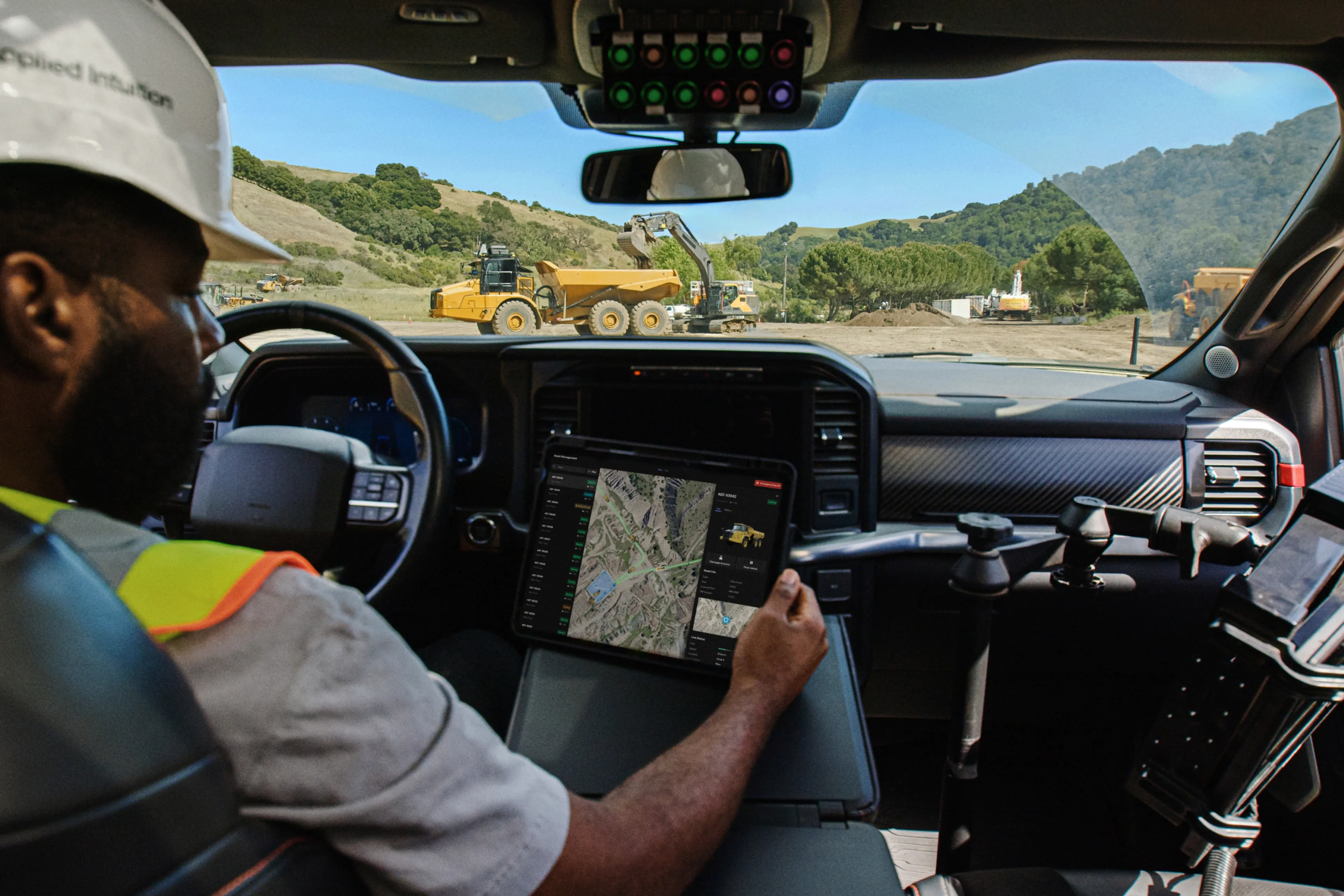
In a quarry in Australia, haul roads shift daily, dust and debris choke visibility, heavy equipment moves unpredictably through shared work zones, and GPS signals routinely drop out. Through it all, autonomous trucks are being asked to do something other autonomous haulage systems struggle to do: keep going.
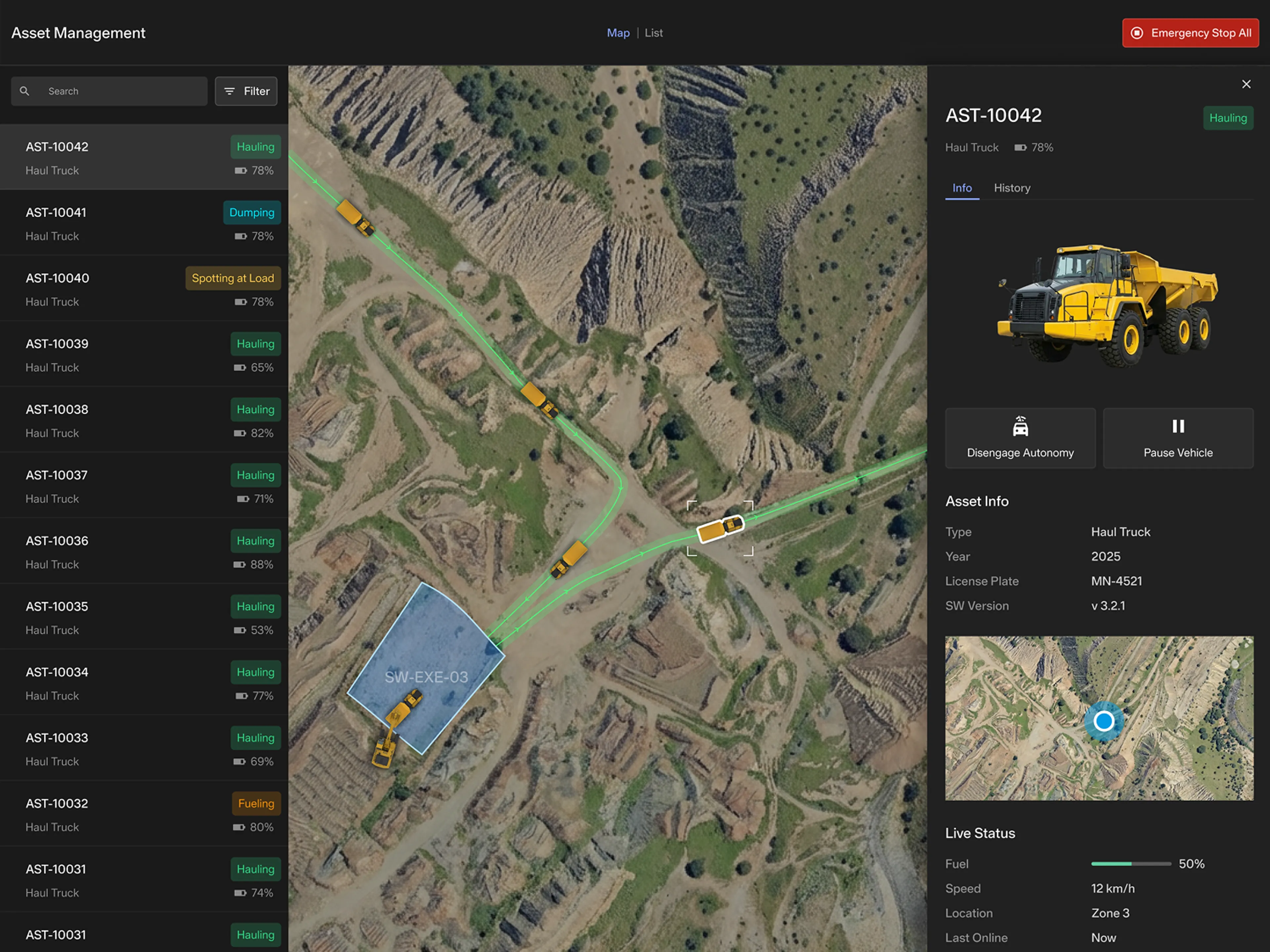
That’s what Applied Intuition is doing with its Self-Driving System (SDS) for Construction, now being deployed with Heidelberg Materials, one of the world’s largest integrated manufacturers of heavy building materials and solutions. By integrating a fleet-management layer with SDS, the trucks don’t just operate as individual vehicles, but as a coordinated production system.
The technology meets a pressing industry need.
Until now, autonomous haulage was largely limited to the biggest operations—sites that supported dedicated infrastructure, constant connectivity, and the teams of people required to keep systems running. When traditional autonomous haulage systems (AHS) lose GPS, they can come to a full stop in just a few seconds. Applied Intuition’s system, however, can continue to operate, even in completely GPS-denied environments, because its autonomy stack runs directly on the vehicle. This eliminates the need for constant connectivity and heavy site infrastructure, and it means the system can be deployed in smaller, more variable environments, including sites with just a handful of trucks.
Traditionally, these smaller quarry sites, which make up a significant share of the market, were harder to automate because the economics don’t add up as easily. SDS for Construction opens up a much larger portion of quarry sites to automation.
The Heidelberg Materials partnership is a major real-world test of that idea, and it starts this June with a site in Australia. The operation marks a shift from one-off autonomous deployments to a repeatable model that can be rolled out across sites of different sizes, layouts, and operating conditions.
“For Applied Intuition, scaling autonomy doesn’t only mean tackling the biggest sites—it means making the smallest ones work too,” said Joe Forcash, head of Construction, Mining, and Agriculture at Applied Intuition. “We’re building technology to make every type of site more intelligent and efficient.”
SDS for Construction is built for conditions like these. Each truck runs its own onboard autonomy stack, handling localization, perception, planning, and controls in real time. The setup includes cameras for full vehicle coverage, lidar for 3D perception, a global navigation satellite system, and inertial sensors like inertial measurement units (IMUs) and wheel encoders. Those signals are run through a localization system that continuously estimates the vehicle’s position—even when GPS is degraded or unavailable—allowing the truck to keep operating.
Under the hood are high-performance GPUs running perception and machine-learning algorithms. Because the kit is modular and OEM agnostic, it can be installed across mixed fleets without requiring a full redesign for each deployment.
As the truck moves, the system builds and updates a live, 3D understanding of the environment using simultaneous localization and mapping (SLAM), tracking obstacles and terrain changes in real time. A planning layer determines the best path forward based on that understanding, while a control system translates those decisions into steering, braking, and acceleration, effectively replicating the inputs of a human operator.
The result is a truck that doesn’t just follow a predefined route. It interprets its surroundings, adjusts its path, and continues operating as conditions change.
A fleet-management system coordinates activity across the quarry or construction site in parallel, assigning trucks to load and dump zones, tracking progress, and managing overall material flow. Together, the two layers allow trucks to make real-time decisions while operating within a larger operation.
With the Heidelberg Materials’ deployment, that coordinated autonomy plays out across the full production cycle. Trucks don’t just move between points; they position themselves for loading, navigate changing terrain, and execute dumping in dynamic environments where conditions shift throughout the day.
“Advancing automation and AI applications is a key pillar of our technical excellence agenda as we look to constantly raise the bar for our processes and equipment,” Alex Conrads, chief technical officer and member of the Managing Board of Heidelberg Materials, said in a press release announcing the rollout. “With a strong global autonomous deployment team working closely with best-in-class technology partners, we are now focused on scaling the technology in a disciplined, results-driven way.”
Construction is often structured around the same routine—loading, hauling, and dumping—performed over and over again in conditions that are constantly changing.
Applied Intuition uses those cycles, and the shifting conditions experienced by each one, as a feedback loop to get smarter.
With every cycle, the system collects data and refines its performance of key tasks: how it approaches a loading area, how it positions itself relative to other equipment, how it navigates terrain that changes over time, and how it executes dumping.
That data is then fed back into the system across deployments, where it is used to retrain models and push updates over the air, allowing the system to improve its handling of new obstacles and edge cases in days or weeks, not months. The same feedback loop also shapes how the system is deployed. Instead of long, custom integrations, the process follows a more repeatable path: Define the hardware architecture, validate against site-specific operating requirements, and iterate quickly in the field.
Some of the most complex behavior shows up at the end of that cycle. Dumping isn’t always a fixed action. It requires precise positioning of the truck and careful control of how material is fed into a processing facility, such as a crushing/screening plant.
Over time, the goal for SDS for Construction is to master all these different types of scenarios and adjust automatically based on the patterns it observes. It will also be integrated into a range of construction and mining vehicles, from haulers and loaders to support vehicles.
For the construction sites of the future, these improvements can open up an entirely new operating model. Instead of being concentrated in a few large sites, autonomy can extend over a broad range of operations. Fleets can be managed by fewer operators, utilization can increase, and sites that were previously too complex or too expensive to automate become viable.
"Thousands of quarry and construction sites have never been able to justify autonomy," Forcash said. "SDS for Construction changes that math. The market for autonomous haulage just got a lot bigger."