Building Physical AI at National Scale in Saudi Arabia
Applied Intuition and HUMAIN announce collaboration to deploy autonomous trucks and then expand into other sectors, including robotaxis.
Saudi Arabia is set to become a leader in physical AI, starting with launching autonomous trucking at national scale. Applied Intuition and HUMAIN, a PIF company delivering full-stack artificial intelligence capabilities globally, announced a strategic collaboration to deploy thousands of autonomous trucks throughout key logistics corridors by 2030, at a scale that would make it the largest autonomous trucking network in the world.
The companies will establish a foundational framework for autonomy across the Kingdom, and it will serve as the first major initiative under HUMAIN’s physical AI strategy. Future phases of the collaboration will explore expansion into robotaxis, ports, mining, and other industries.
“When we started Applied Intuition, our vision was to build one platform that could bring intelligence to any machine, in any industry,” says Qasar Younis, co-founder CEO of Applied Intuition. “Saudi Arabia is where that vision comes to life on a national scale. We’re starting with autonomous trucks, but together with HUMAIN, we’re laying the foundation for intelligent infrastructure and taking a big step toward our goal of bringing intelligence to a billion machines.”
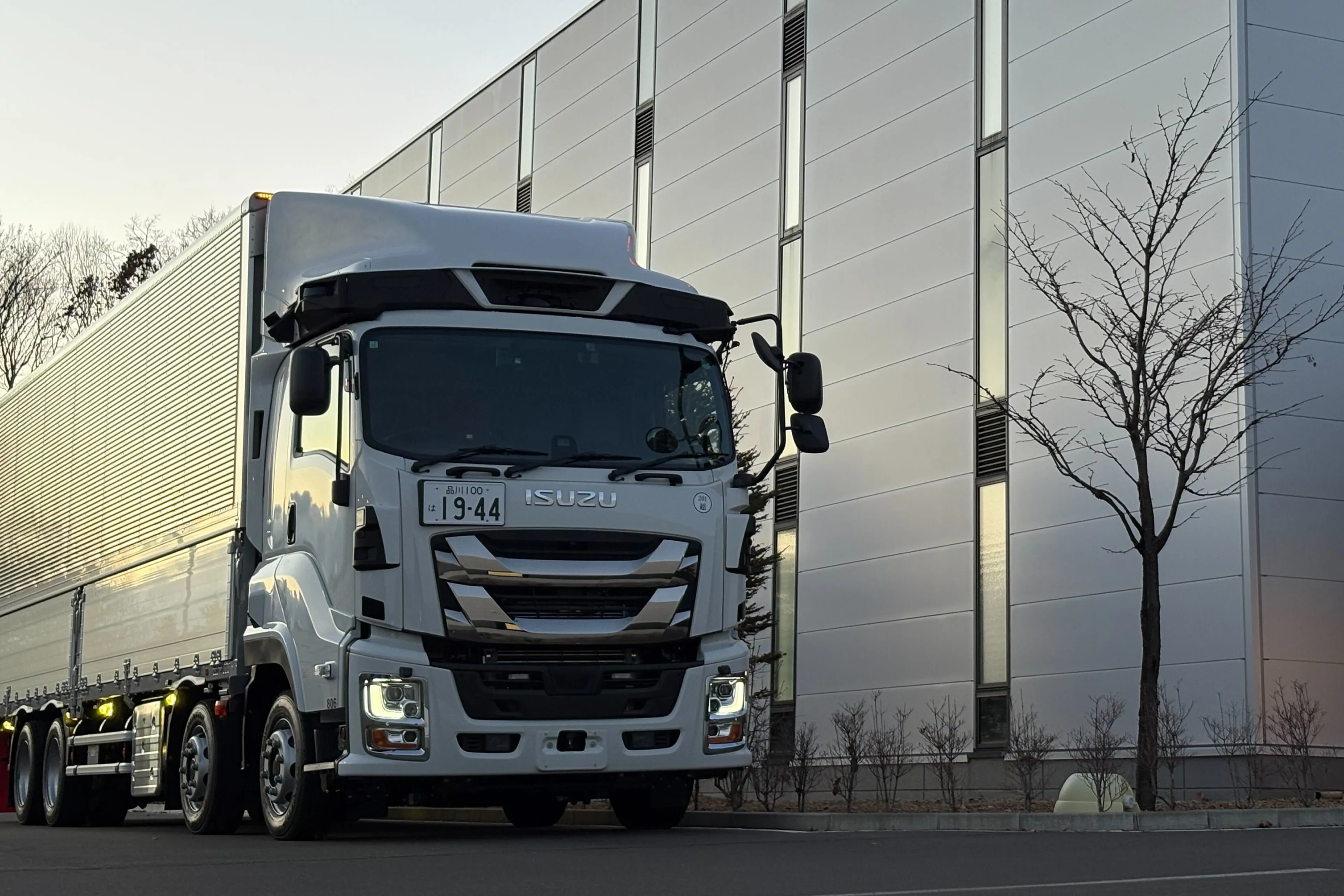
Applied Intuition’s Self-Driving System (SDS), together with Vehicle OS and other supporting vehicle-intelligence technologies, will be the centerpiece of the collaboration. SDS is already operating on roads in the U.S., Europe, and Japan, where Applied Intuition is running L4 trucking with Isuzu Motors.
SDS was launched in 2025 with a focus on passenger vehicles, but was quickly extended to other use cases in other industries, including mining, construction, and trucking. Today SDS works on any machine that moves, wherever that machine goes: highways, urban streets, mines, and farms, and on land, in the air, and at sea. The platform adapts to each vehicle and environment, while the underlying architecture remains consistent. Data from every mile driven feeds back into Applied Intuition’s large-scale simulation and development infrastructure, where engineers recreate real-world scenarios, validate improvements, and push updated models back to the fleet.
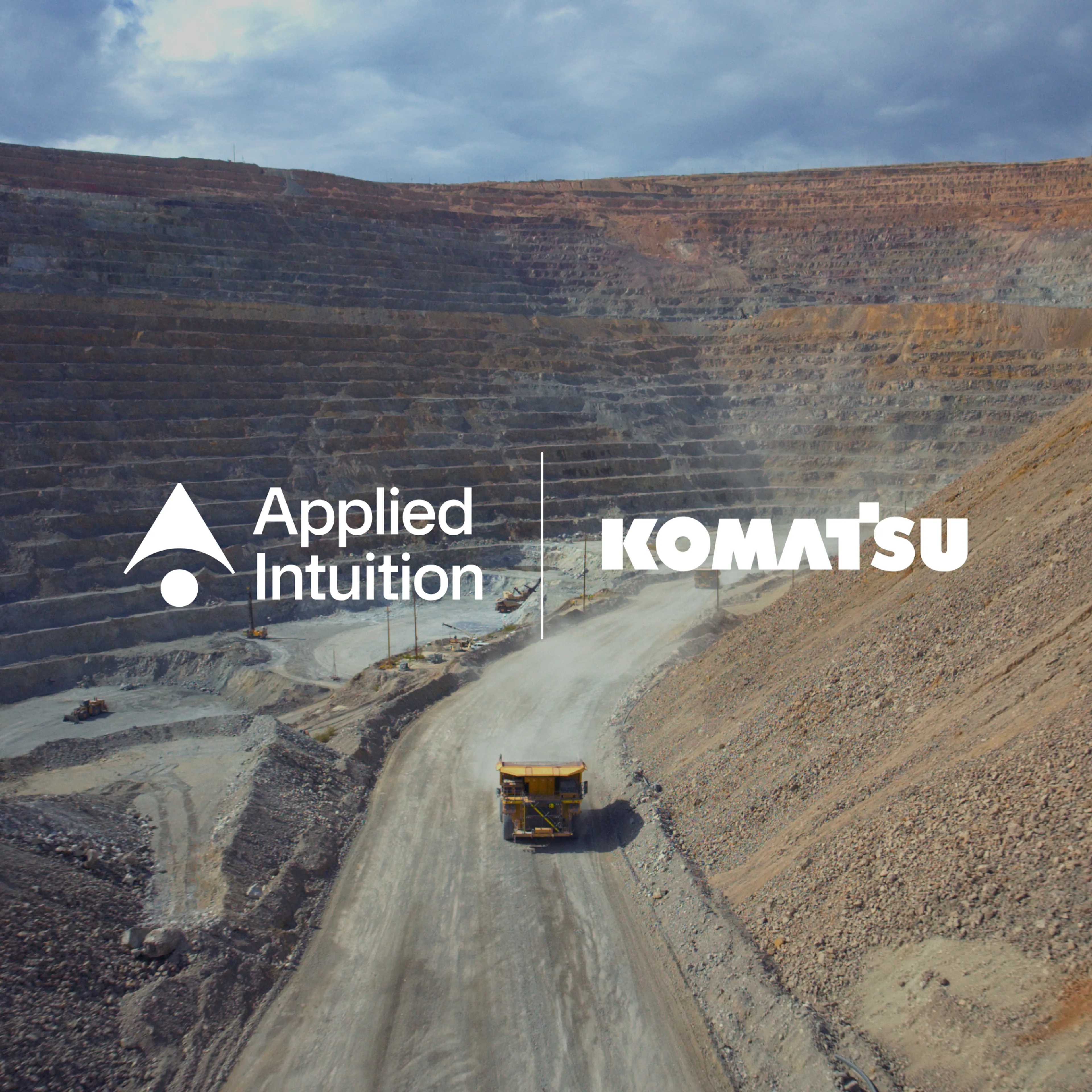
That proven foundation will now be deployed in one of the world’s most demanding environments for trucking, where extreme heat, blowing sand, and long-haul routes can push vehicles to their limits. It won’t be the first time the platform has operated in a challenging environment. Through a partnership with Komatsu, Applied Intuition’s Vehicle OS, autonomous haulage, and collision avoidance systems are being used in mining: an industry defined by heat, dust, uneven terrain, and remote sites far from support infrastructure. Many of the challenges being solved at mine sites are the same hurdles that will need to be overcome in Saudi Arabia—at a scale unmatched in the trucking world.
“Most autonomy programs begin with a handful of vehicles or a single route. We’re starting with the ambition to transform an entire country’s freight network,” Younis says. “We’ve spent nearly a decade building the technology to deploy autonomy safely across vehicles, industries, and environments. Now we’re bringing everything we’ve learned to Saudi Arabia and scaling it to a level the industry has never seen before.”
Trucking is the backbone of most economies, and among its biggest constraints is the human behind the wheel. That’s one of the reasons so many countries and economies are considering how to incorporate more autonomy into their freight networks.
Autonomous trucks don’t stop when a driver’s shift ends, and they don’t get tired or distracted. Autonomous fleets optimize every mile for fuel efficiency and continuously monitor vehicle health, keeping fleets running safely and reliably.
Sending thousands of autonomous trucks into the Kingdom’s freight corridors, which connect ports, industrial cities, and distribution hubs across long stretches of highway, allows goods to move more safely and more efficiently throughout the entire network, around the clock. The initial phase of the HUMAIN collaboration will focus on autonomous trucking, but future phases will explore additional physical AI applications.
“Autonomous trucking is just the beginning,” Younis says. “Once you have the data, infrastructure, and expertise to deploy physical AI at national scale, you can extend that intelligence to everything that moves. And when goods and people move safer, faster, and at lower cost, the benefits compound across the entire economy. That’s the opportunity we see in Saudi Arabia.”
With its HUMAIN collaboration, Applied Intuition is establishing a model for deploying physical AI at national scale. Applied Intuition has an office in Riyadh and is hiring a local team to work on the program directly, part of a long-term commitment to creating employment and building technical capabilities in the Kingdom. The office opens with trucks already on the ground, and will create the high-value jobs required to deploy, operate, and scale autonomous fleets.
Saudi Arabia is building the capabilities to continuously improve physical AI at national scale. What HUMAIN and Applied Intuition build together in the Kingdom could become a blueprint for a much bigger transformation: a world where intelligent infrastructure makes entire economies safer, more productive, and more prosperous.