Inside Intersect Japan: Physical AI, Built for Japan
The June 2026 event showcased Applied Intuition’s prowess in physical AI across the country’s automotive, trucking, and industrial sectors — and announced SDS expanding to Japan.
Few countries have shaped modern industry more than Japan.
Its automakers, equipment manufacturers, and industrial companies helped establish global standards for engineering, quality, and continuous improvement. From passenger vehicles and commercial trucks to construction equipment, mining machinery, and factory automation, Japanese OEMs have spent decades building some of the world’s most sophisticated physical systems. Today, many of those same companies are confronting a new transition: how to bring software and AI into the machines that power the global economy.
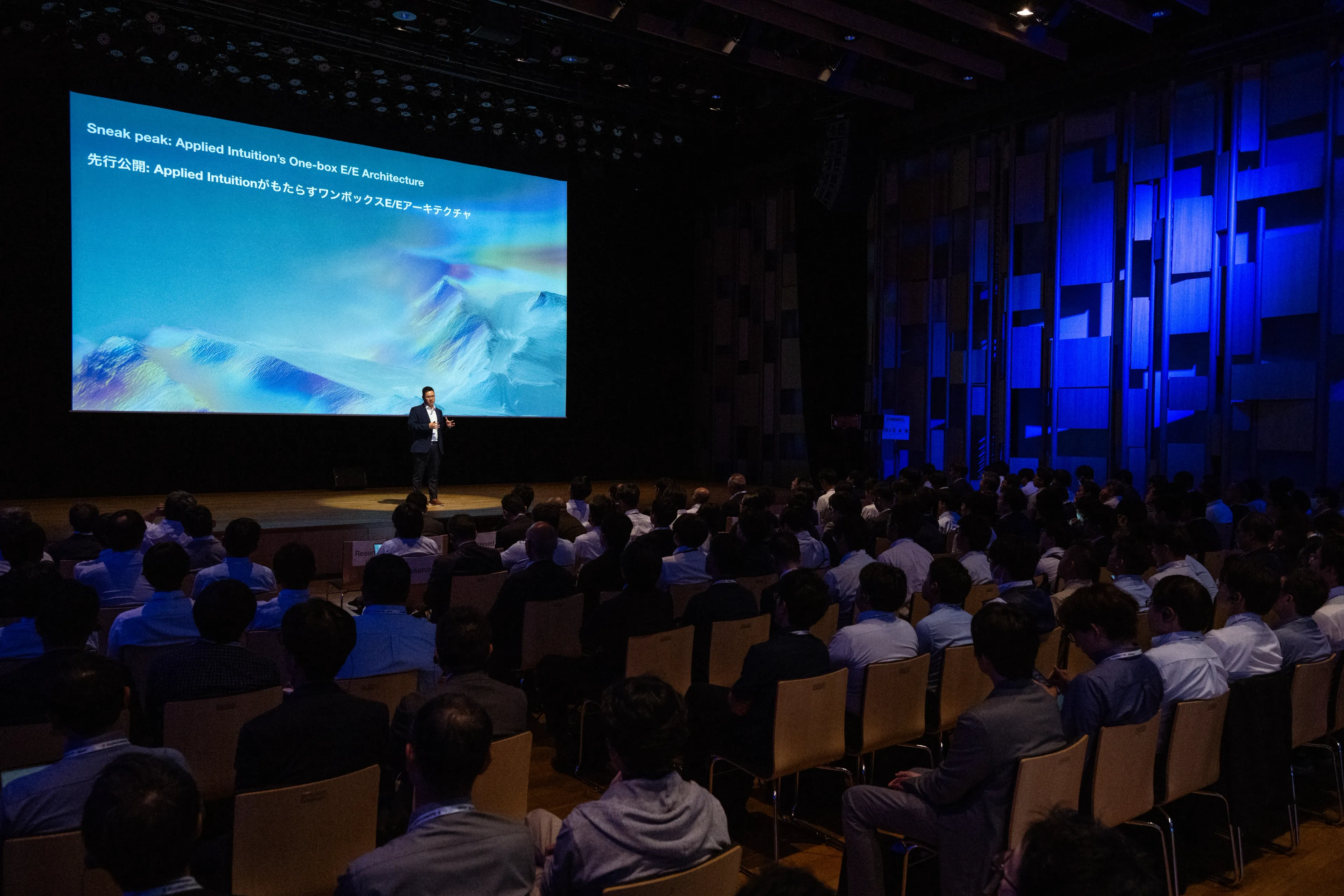
Head of Automotive Will Lin speaks at Intersect 26
That made Japan a fitting location for Intersect 26: Japan, where Applied Intuition brought together more than 200 attendees including thought leaders from across the automotive, trucking, construction, mining, and technology sectors to discuss the future of physical AI. Held last week at Otemachi Mitsui Hall in Tokyo, the event explored how a new generation of intelligent machines is emerging at the intersection of advanced software, artificial intelligence, and Japan’s deep engineering expertise.
For those in attendance, it was also an inside look at how Applied Intuition, a leader in physical AI, views the ecosystem.
Adriano Quiroga, head of vehicle intelligence, detailed the decade of simulation, validation, and other work that went into building the expertise and infrastructure that now allows us to deploy physical AI across industries. Chief Scientist Wei Zhan presented a new paradigm for autonomous driving and the cutting-edge AI technologies behind AV 3.0. Meanwhile, Deputy CTO Malhar Patel offered his vision for how companies can become AI native, from engineering to talent to finance. And Will Lin, head of automotive, discussed semiconductor economics and the path to one-box architecture.
Collectively, the presentation offered a view into how Applied Intuition approaches physical AI: build the infrastructure, then apply it across industries, geographies, and increasingly complex real-world environments.
Nowhere was that strategy more evident than in our biggest announcement of the day: the launch of Self-Driving System for Japan.
Japan is one of the world’s most important automotive markets and one of the most demanding environments for autonomous driving. The launch of SDS in Japan, less than a year after entering North America and Europe, demonstrates the flexibility of Applied Intuition's platform and its ability to scale globally without being rebuilt for each market.
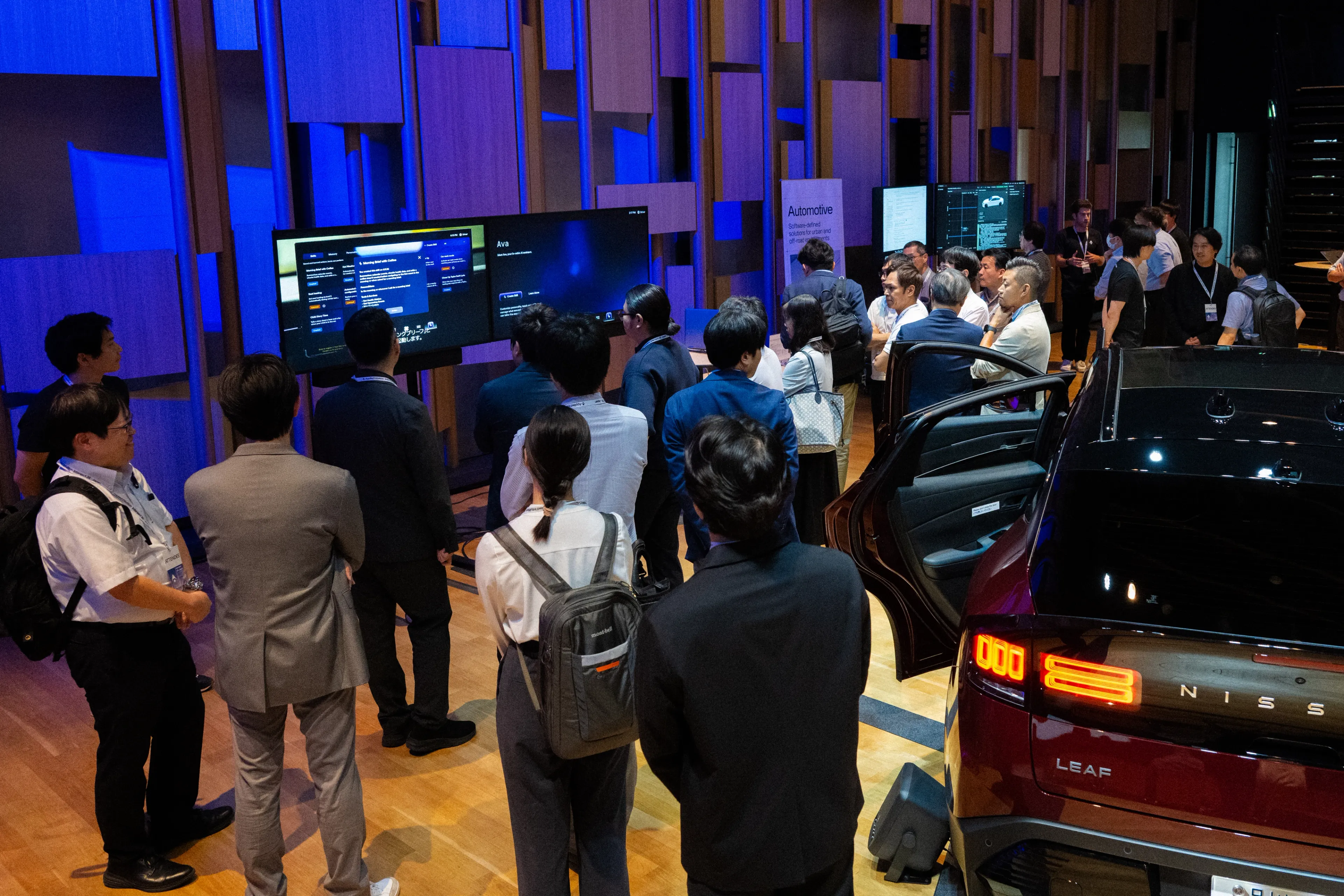
Intersect attendees get preview of AI-enabled cockpit experience, built on a Japanese OEM's passenger EV with Applied Intuition's Vehicle OS onboard
For years, Applied Intuition has worked closely with Japan’s leading automotive and commercial vehicle manufacturers, built out local engineering teams, established vehicle operations, and developed regional data infrastructure in order to give automakers a quicker path to deploying autonomous driving technologies in the market.
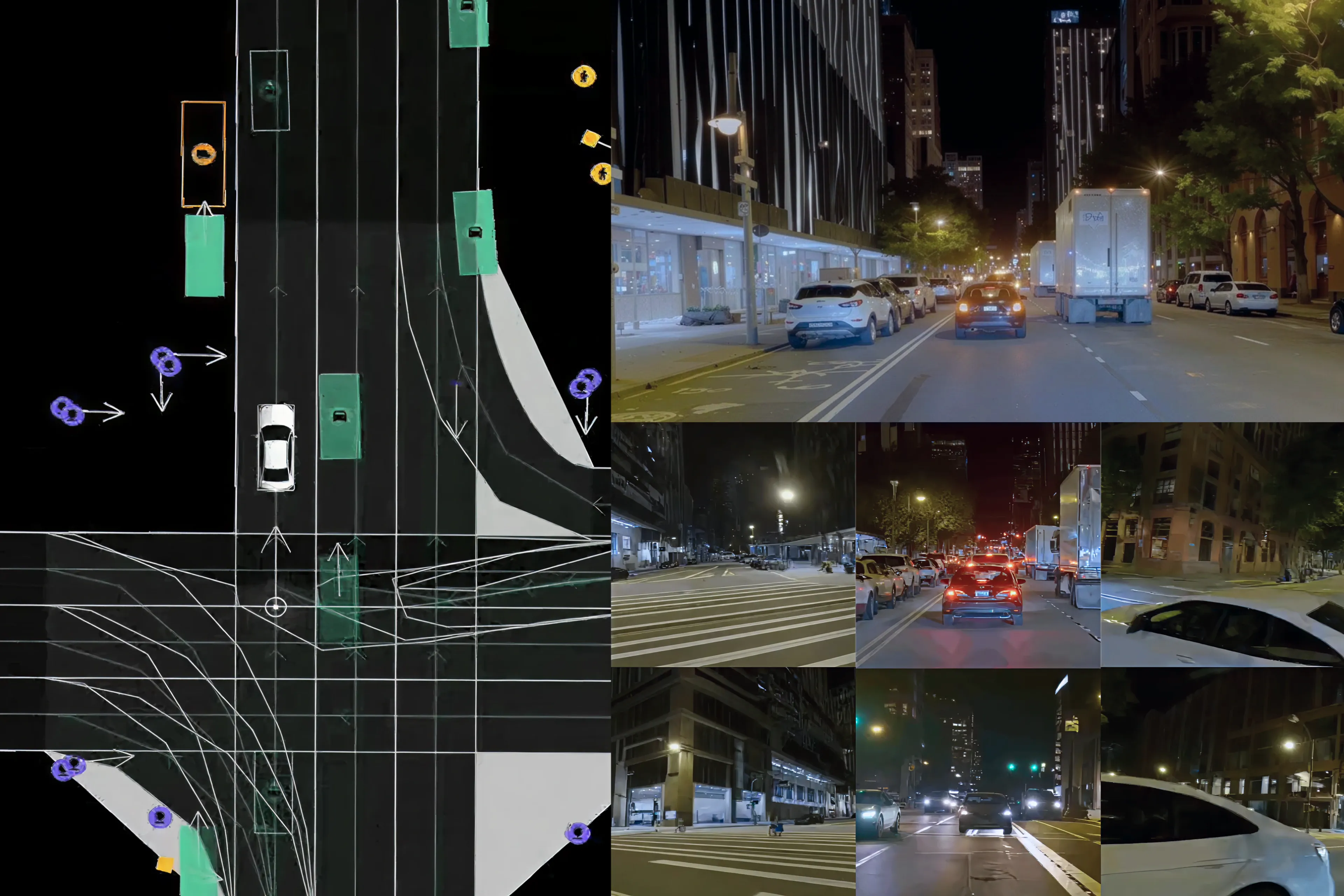
SDS enables advanced driver-assistance and automated driving capabilities across urban driving, highways, and parking environments. The system is tailored to navigate Japan’s specific conditions: tight urban roads, high-complexity intersections, and left-side driving. Plus, it runs on standard production hardware, giving automakers a scalable path across vehicle programs.
Just as importantly, SDS is hardware-flexible. The platform supports a broad range of compute architectures, including passively cooled NVIDIA DRIVE platforms, allowing automakers to adopt new generations of compute and sensors without redesigning their autonomy stack. That flexibility gives OEMs greater control over performance, cost, and deployment strategy.
Underpinning SDS is Applied Intuition’s end-to-end data and development platform, which combines real-world and synthetic data to accelerate training, validation, and deployment. The result is a system that can iterate quickly, adapt to new markets, and deliver increasingly natural driving behavior. For Applied Intuition, Japan is not simply another regional launch. It is further proof that a single physical AI platform can support intelligent driving at global scale.
Throughout the day, attendees could see Applied’s platform in action across the industries it serves. This included a demo of a Ford Mustang Mach-E running Applied’s self-driving system, and a live feed showed Isuzu autonomous trucks operating on a real commercial route, the Shin-Tomei Expressway. Viewers could see the objects the truck is detecting as well as the path it’s planning to follow.
A video from Rockwell Proving Ground in Sunol, California, Applied’s dedicated test facility, showed the same software, sensor fusion, and AI being applied to heavy construction and mining.
Each of the demos made the point that Applied’s single platform is effective across many industries—and is already operational in the field.
Applied Intuition's presence in Japan was not built overnight. The relationships on display at Intersect 26: Japan, with automotive OEMs, commercial vehicle manufacturers, and industrial leaders, are the result of years of close engineering collaboration, shared development programs, and long-term investment in the region.
Japan occupies a unique position in the physical AI landscape. It is home to some of the world’s most respected engineering organizations and the companies that have shaped modern mobility, manufacturing, and industrial operations. At the same time, many of the challenges physical AI is designed to address—from workforce shortages to increasing system complexity—are particularly relevant in Japan, making it one of the most important proving grounds for the next generation of intelligent machines.
For Applied Intuition, Japan is more than a market. It is a strategic partner in the development of physical AI. The country’s engineering culture, operational excellence, and industrial leadership position it to play a defining role in how intelligent vehicles and machines are built and deployed over the coming decades. Applied Intuition is proud to be building that future alongside its partners in Japan.