The Future of Vehicle Software Is Agentic
Modern SDVs demand more than intelligent software, they require intelligent engineering systems. That’s Dana.
There is a reason the automotive industry is moving rapidly toward software-defined vehicles: SDVs create better end products for drivers.
Every over-the-air update, every new driver-assistance capability, and every personalized in-cabin experience raises the bar for what customers expect from their vehicles.
For OEMs, however, delivering on those expectations requires a fundamentally different way of building software. If legacy vehicles were constrained by hardware and production timelines, software-defined architectures introduce a new challenge: engineering software at enormous scale. The bottleneck is no longer writing code. It's coordinating thousands of engineers, hundreds of tools, and countless workflows into one continuous engineering system.
That’s why we built Dana for Software-Defined Vehicles.
Among Dana’s many applications, Dana for SDVs brings AI directly into the vehicle software development lifecycle. It connects the tools, data, and engineering workflows that modern vehicle programs depend on, enabling engineers to use AI agents to work across the entire software development lifecycle, from requirements and architecture to code and validation.
For SDVs to live up to their potential, they need a development process that moves at the speed of AI. That’s Dana.
Every modern vehicle is an engineering marvel, with millions of lines of code developed by thousands of engineers to give consumers a seamless experience. Historically, engineering them has been anything but seamless.
Every new feature or update is powered by a hugely complex engineering effort, with years of painstaking work required by a dozen or more specialized teams before a vehicle ever reaches the road. Also, requirements evolve. Architectures change. Validation grows alongside every new capability. And as customer expectations continue to rise, so does the complexity required to meet them.
Yet deploying even a simple software feature often means navigating a patchwork of disconnected tools, development environments, validation systems, and supplier workflows. Many engineering teams spend more time moving information between systems than they do writing, testing, and shipping software.
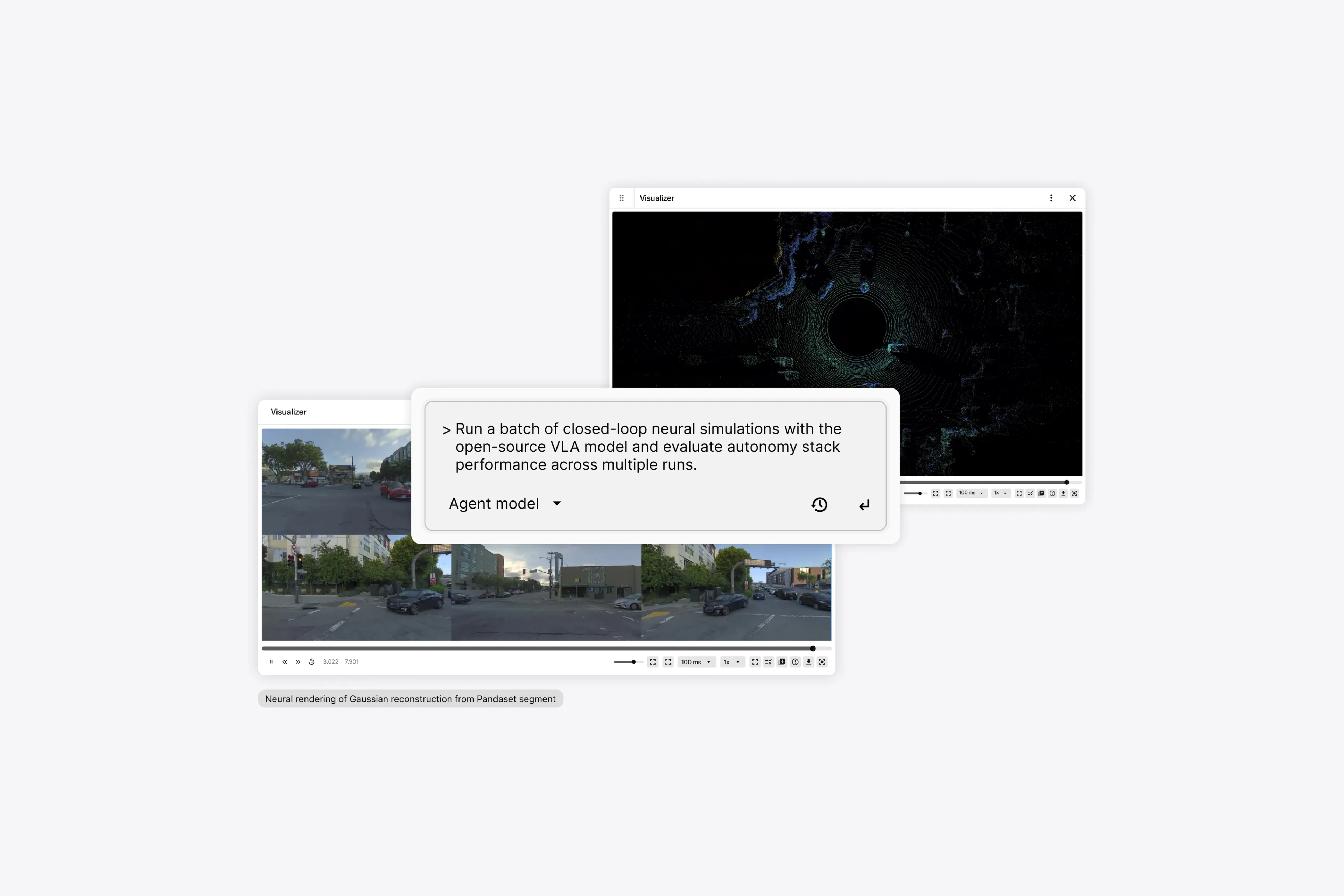
Dana for SDVs was designed to help solve this. Rather than treating AI as a chatbot attached to existing software, Dana makes the development workflow itself agent-operable. For example, requirements and architecture are offered as code rather than locked inside local legacy tools, while development and SIL run in connected cloud environments. That gives agents native access to each stage of the workflow and centralizes the engineering context where the work actually happens. Throughout the lifecycle, Dana preserves context across every stage—from the original requirement through architecture, implementation, and validation. That continuity is what makes AI genuinely useful.
Instead of asking an isolated AI assistant questions, engineers work with agents that understand where a feature came from, how it was implemented, and how it should be validated.
The biggest impact of Dana isn’t simply that individual engineers write code faster. It’s that entire engineering organizations can work more effectively, building higher-quality features and customer experiences more quickly than ever before.
Today’s OEMs are often structured around well-oiled teams: Systems engineers define requirements, software engineers implement features, validation teams verify them, and integration teams bring everything together. Each group owns a small portion of the development lifecycle, with significant coordination required among them.
We built Dana to help unify these silos and add in an agentic layer to the overall lifecycle, so each engineer doesn’t need to be an expert across the entire process to increase overall output. The goal was to take work that once moved across disconnected tools and specialized teams and not only make it agent-operable, but also adhere to high safety standards. Dana can do this because it’s set up on 10 years of Applied Intuition’s deep domain experience in the auto industry (and others), with engineering experience and guardrails built into the platform. The result is that some workflows that once required months of work across multiple teams can be reduced to days for a single developer.
Consider something as essential—and seemingly routine—as validating brake control modules. Today, doing that can require work across requirements, architecture, code, multiple ECUs, simulation, hardware, and the vehicle itself. With Dana, a single developer can compress that process into a single workflow, and work that once moved sequentially across specialized teams can be owned end to end. Dana can read and evaluate requirements, reason across software architecture, work with code in reproducible cloud environments, validate changes in software-in-the-loop and hardware-in-the-loop environments, and ultimately test the same software on a real vehicle.
The same workflow can be applied across virtually every aspect of SDV development—from advanced driver-assistance systems and digital infotainment experiences to vehicle operating system processes, OTA updates, sensor integration, and energy management. Instead of creating a new engineering process for every new capability, Dana brings them together in one connected, agentic workflow. The result is an engineering organization built less around handoffs and more around outcomes, with teams able to own larger portions of the vehicle software lifecycle from requirement to road.
Those same engineering workflows also extend beyond passenger vehicles to software-defined trucks, mining equipment, construction machinery, agricultural vehicles, and defense platforms.
The result is not just faster workflows for OEMs. It’s an engineering organization that spends less time coordinating work and more time building vehicles that differentiate the business.
As OEMs continue to move into a software-defined future, we firmly believe Dana represents that next evolution SDV development. Not because it writes code faster, but because it transforms disconnected engineering tools into one connected, agentic development system. By preserving engineering context at every stage, Dana enables teams to build, validate, and deploy vehicle software with greater speed, continuity, and confidence.
Dana is bringing the power of agents to transform the SDV lifecycle, and allow SDV development to move at the speed of AI.