AI 에이전트 시대에 걸맞는 엔지니어 채용
달라진 엔지니어링에 맞춘 새로운 면접 방식
AI 툴은 대부분의 직무, 특히 소프트웨어 엔지니어링 분야의 업무 방식을 근본적으로 바꿔놓았으며, 지금도 그 변화는 계속되고 있습니다. 이제는 파이썬의 zip 함수가 리스트를 반환하는지, 제너레이터를 반환하는지 일일이 기억해야 하는 시대도, 재무팀을 위한 새로운 풀스택 대시보드 애플리케이션을 만들기 위해 여러 명의 엔지니어로 팀을 꾸려야 하는 시대도 지났습니다.
Applied Intuition은 내부적으로 AI 코딩 에이전트를 적극 도입할 수 있도록 조직 전반의 업무 방식을 재정비했습니다. 엔지니어 여부와 관계없이 사내의 모든 구성원들은 AI를 일상적으로 활용하고 있으며, 에이전트 기반 워크플로를 지속적으로 개선하기 위해 매주 별도의 시간을 투자하고 있습니다.
하지만 이러한 내부 변화에도 불구하고, 우리는 지원자들에게 같은 메시지를 전달하지 못하고 있었습니다. 얼마 전까지도 Applied Intuition의 엔지니어링 면접은 AI를 사용할 수 없는 코딩 테스트와 화이트보드 인터뷰로만 구성되어 있었습니다. 이러한 면접 방식은 업계에서 오랫동안 검증되고 널리 활용되어 왔지만, 분명 지금과는 다른 시대의 기준으로 만들어진 방식이었습니다. 피지컬 AI 분야를 선도하는 기업으로서, Applied Intuition은 엔지니어를 평가하는 방식 또한 그에 걸맞게 변화시켜야 했습니다.
1,000명이 넘는 엔지니어가 함께하는 조직에서 채용 방식을 새롭게 설계하는 일은 결코 가볍게 접근할 수 있는 일이 아니었습니다. Leetcode 스타일 면접에 대해서는 이미 수많은 자료와 검증된 사례가 있지만, AI가 널리 활용되는 시대에 맞춰 엔지니어링 면접을 새롭게 설계하는 일은 아직 누구도 정답을 제시하지 못한 미지의 영역에 가깝습니다. 이번 전면 개편을 추진하면서 Applied Intuition이 가장 중요하게 고려한 사항은 다음과 같습니다.
다른 기업들 역시 AI를 면접 과정에 도입하기 위해 다양한 방식을 시도하고 있지만, 우리는 앞서 살펴본 원칙을 바탕으로 다음과 같은 면접 방식을 선택했습니다.
온사이트 면접은 이제 45분 동안 진행되는 시스템 설계 과제로 시작됩니다. 지원자는 대부분 Applied Intuition에서 실제로 해결해야 했던 사례를 바탕으로 한 개방형 문제를 함께 논의하며, 자신이라면 이를 어떻게 설계하고 구현할지 설명합니다.
이후 지원자에게는 자신이 방금 설계한 시스템이 작동 가능한 프로토타입을 구현할 수 있도록 2시간이 주어지며 이 과정에서 지원자는 원하는 AI 모델과 프레임워크를 자유롭게 사용할 수 있습니다. 마지막으로 엔지니어 패널 앞에서 자신이 구현한 결과물을 시연하고, 구현 과정에서 내린 의사결정과 그 이유를 설명하며, 다시 진행한다면 어떤 부분을 다르게 접근할 것인지까지 공유합니다.
새로운 면접 방식을 검증하기 위해, 우리는 실제 지원자를 대상으로 30회 이상의 온사이트 면접을 진행했습니다. 또한 회사 전반에서 이번 변화에 가장 회의적인 입장을 보였던 시니어 엔지니어들까지 직접 참여하도록 했으며, 이전 세대 면접 문항을 설계했던 엔지니어들도 이 과정에 함께했습니다.이처럼 큰 변화를 추진하는 과정에서 늘 그렇듯, 초반에는 건설적인 비판도 적지 않았고, 새로운 면접 방식을 더욱 효과적으로 개선할 수 있는 훌륭한 피드백도 많이 얻을 수 있었습니다. 또한 점점 새로운 방식의 면접 횟수가 늘어날수록, 새로운 방식의 가치를 더 잘 이해하게 된다는 점도 확인할 수 있었습니다.
새로운 면접 방식은 면접관과 지원자 모두에게 처음 도입되는 변화인 만큼, 우리는 지원자 경험도 중요한 요소로 고려했습니다. 이를 위해 지원자 평가표와 함께 면접관들의 면접 방식에 대한 피드백을 수집하고, 채용 파이프라인 데이터도 함께 추적관리 했습니다.
초기 결과는 새로운 면접 방식이 더 효과적이라는 점을 보여주었습니다. 실제 지원자 30명을 대상으로 첫 번째 시범 면접을 진행한 15명의 면접관으로부터 수십 건의 응답을 수집한 결과, 86%는 지원자가 Applied Intuition에서 실제로 업무를 수행할 역량이 있는지 더 잘 파악할 수 있었다고 답변했습니다. 또한 기존 면접 방식보다 더 우수하다고 85%가 평가했으며, 지원자 평가 결과에 대해 더 높은 확신을 갖게 되었다는 답변에는 91%가 응답했습니다. 나아가 99%는 이 면접 방식을 계속 유지해야 한다고 답했습니다.
“이번 면접 방식은 정말 신선했고, 반복적으로 사용되는 Leetcode 문제를 푸는 것보다 훨씬 좋았습니다. 이를 통해 Applied Intuition이 최첨단 기술을 선도하는 회사라는 인상을 받았고, 이곳에서 실제로 어떤 일을 하게 될지도 구체적으로 이해할 수 있었습니다. 이러한 면접 방식은 제가 Applied Intuition에 합류하기로 결정한 중요한 이유 중 하나였습니다.”
— 새로운 면접 방식으로 채용된 최근 입사자
또한 면접관들에게 우리가 채용 과정에서 중요하게 평가하는 각 역량을 얼마나 자신있게 평가할 수 있었는지에 대해, 1점부터 5점까지의 척도로 평가하도록 했습니다. 그 결과, 7개 평가 항목 중 6개가 4.0점에서 4.7점 사이의 높은 점수를 기록했습니다.면접관들은 특히 실무 수행 능력, 익숙하지 않은 문제에 대응하는 역량, 기술적 커뮤니케이션, 논리적 사고력, 그리고 기술적 완성도 측면에서 이번 면접 방식이 지원자의 역량을 명확하게 드러낸다고 평가했습니다. 반면, 예상했던 것처럼 상대적으로 낮은 점수를 받은 항목은 코드의 완성도와 설계 역량이었으며, 이는 앞으로도 기술 전화 면접 방식을 통해 계속 평가하고자 합니다.
지원자와 면접과 모두로부터 이번 면접 방식이 효과적이라는 긍정적인 결과를 확인한 만큼, 이제는 이를 회사 전반의 채용 프로세스로 확대 적용하기 위해 준비하고 있습니다.
기존 면접 방식에 사용되던 문제 라이브러리를 구축하는 데는 수년이 걸렸습니다. 그리고 이제는 AI 면접에 맞는 새로운 문제 라이브러리를 처음부터 다시 만들어야 했습니다. 만약 엔지니어들이 AI 활용 면접을 위한 새로운 문제 라이브러리를 마련해 주기만을 기다렸다면, 이 작업은 우리가 늘 해야 하는 일상적인 업무에 밀려 뒤로 미뤄질 것이라는 점을 잘 알고 있었습니다. 그래서 우리는 시범 운영을 통해 얻은 추진력을 바탕으로 새로운 면접 방식을 정식 도입하기로 결정했습니다.
다행히도 우리 엔지니어들은 이러한 과제를 충분히 해낼 수 있었습니다. 피지컬 AI 분야에는 해결해야 할 복잡하고 어려운 문제가 끊임없이 존재하며, 이러한 문제를 해결하고 나면 실제 업무를 잘 반영하는 면접 문제로도 활용할 수 있게 되었습니다.
새로운 면접 방식을 도입한 지 불과 한 달 만에 이미 많은 새로운 문제가 승인되었거나 개발 중이며, 지금도 매주 새로운 문제가 계속해서 추가되고 있습니다. 문제 라이브러리가 점차 확장되고 더 많은 면접관이 새로운 면접 방식을 운영하는 방법을 익히면서, 우리는 이 과정이 또 하나의 장점을 가지고 있다는 점도 확인할 수 있었습니다. 바로 직관적이라는 점입니다. 면접 과정이 실제 업무에서의 하루와 매우 유사하기 때문에 엔지니어들은 빠르게 면접 운영 방식을 익힐 수 있으며, 그 역량 역시 신속하게 평가가 가능합니다.
시범 운영을 진행하면서, 이 면접 방식을 수백 명의 엔지니어링 면접관에게 확대 적용하려면 충분한 공감대 형성과 표준화가 필요하다는 점을 깨달았습니다. 그래서 우리는 시범 운영 과정에서 이루어진 논의와 주요 인사이트, 수집한 데이터, 그리고 반복적으로 발생한 과제들을 모두 하나의 내부 애플리케이션에 정리해 도입 과정을 지원하기로 했습니다.Applied Intuition에서 자체 개발한 내부 툴인 Apps Platform을 활용해, 시범 운영 데이터를 교육 자료와 함께 확인할 수 있는 포털을 구축했습니다. Apps Platform은 누구나 1분 이내에 바이브 코딩 방식으로 완전히 동작하는 애플리케이션을 만들수 있도록 지원하는 내부 플랫폼입니다.
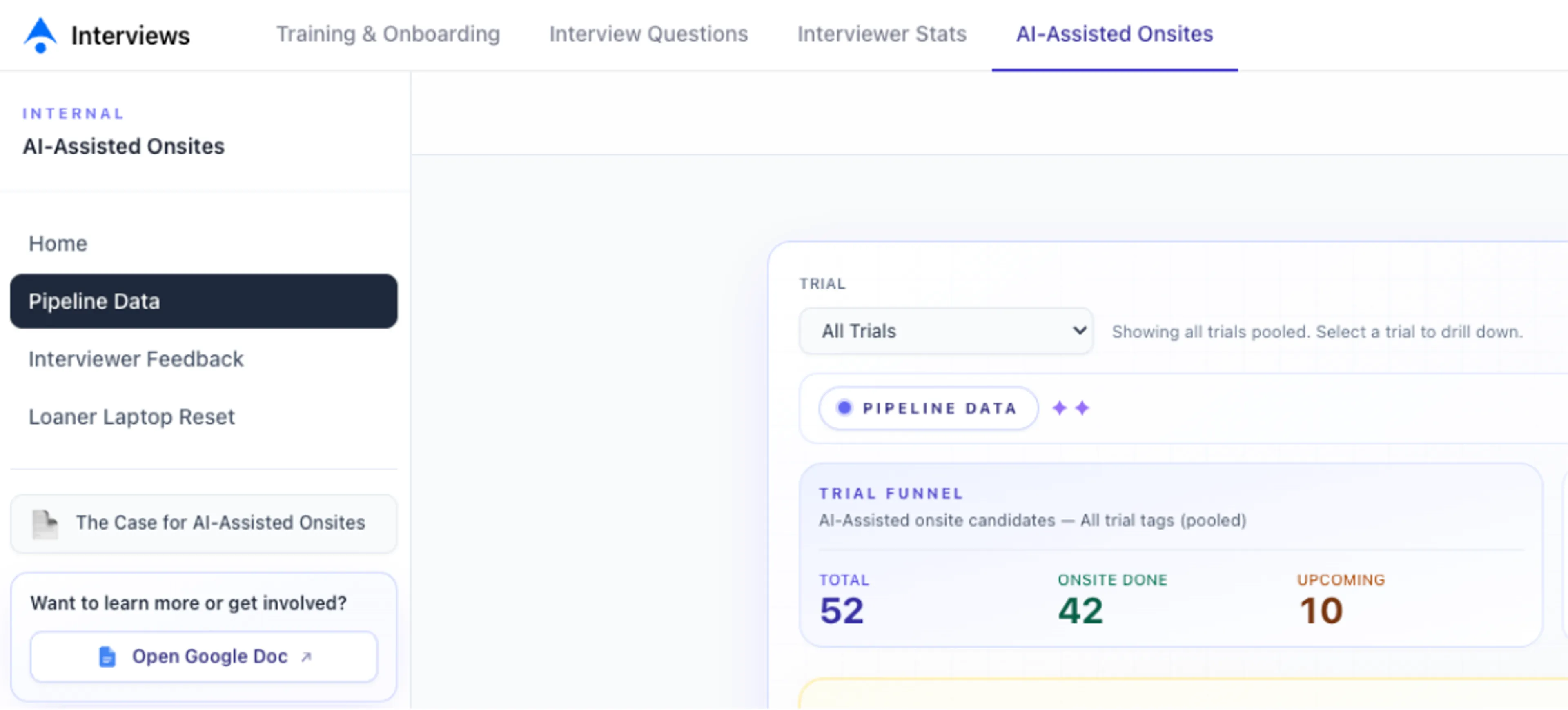
우리는 새로운 면접 문제를 계속해서 개발하고 더 많은 면접관을 교육하는 과정에서도 지속적으로 피드백을 수집하여 면접 방식을 개선하고 있습니다. 이 면접 방식은 아직 새로운 시도인 데다, AI 연구 기관에서 새로운 모델이 출시될 때마다 지원자들이 이 면접에서 보여줄 수 있는 역량도 크게 달라지기 때문에 이 면접 방식이 우리가 세운 원칙에 얼마나 잘 부합하는지 지속적으로 재평가하고, 필요에 따라 방향을 조정해 나가야 합니다.
Applied Intuition에서의 업무가 어떤 느낌인지 궁금하다면, 채용 정보 페이지 를 확인해 보세요!
소프트웨어 엔지니어
Applied Intuition의 소프트웨어 엔지니어로 안전한 자율 주행 기술 개발에 주력하고 있음. UC 버클리에서 전기공학 및 컴퓨터과학 석사 학위를 취득했으며, 석사 논문에서는 자율 주행 차량의 시뮬레이션 기반 검증에 대해 연구함. 또한 이전에는 구글과 테슬라 오토파일럿에서 근무한 경력이 있음.